Why a council asks for one
Councils protect vegetation under local laws, planning scheme overlays and orders. Where a tree falls under one of those, works affecting it need an approval, and the council needs to understand the tree before it can decide.
That is what the report provides: an independent, qualified account of what the tree is, what condition it is in, what is proposed, and what the proposal would do to it. The council weighs that against its own instrument and makes a determination.
The report does not approve anything and cannot promise an outcome. What it can do is make sure the decision is being made on accurate information rather than on an application that leaves the assessing officer guessing.
No arborist can tell you a council will approve something. Anyone who does is describing an outcome they do not control.
Seven councils, seven requirements
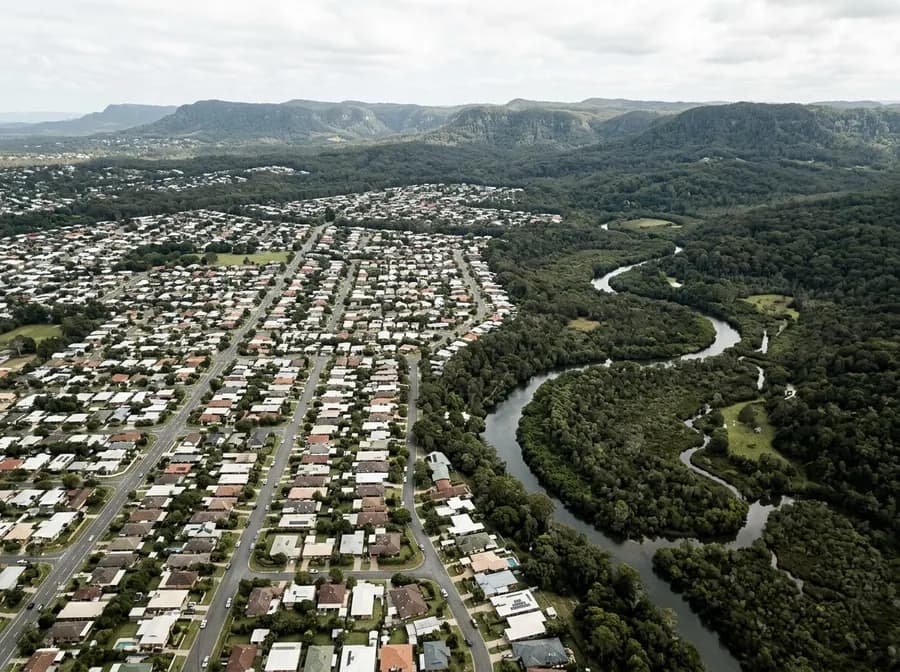
The single most common misunderstanding is that a council arborist report is one thing. It is not — each council protects vegetation under a different instrument, names the approval differently, and asks for different arboricultural information.
Brisbane works through the Natural Assets Local Law. Redland uses Local Law No. 6 and Tree Protection Areas. Ipswich works through Vegetation Protection Orders. Logan handles clearing through operational works. A report prepared for one council does not automatically satisfy another.
What the report has to establish
The specifics vary with the council and the application, but most requirements come back to the same set of questions.
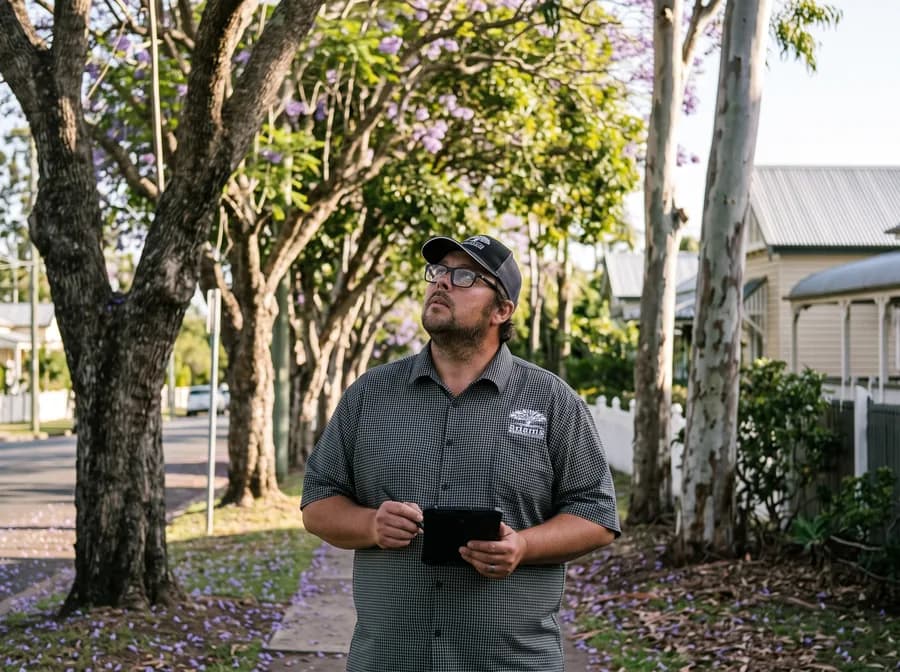
- What the tree isSpecies, dimensions and location, recorded on site rather than estimated.
- What condition it is inHealth, structure, and any defects that bear on the decision.
- What is proposedThe works, described accurately enough that the impact can be assessed.
- What the impact would beOn the tree, and on anything retained around it.
- What alternatives existWhere the works could be achieved another way, that belongs in the report.
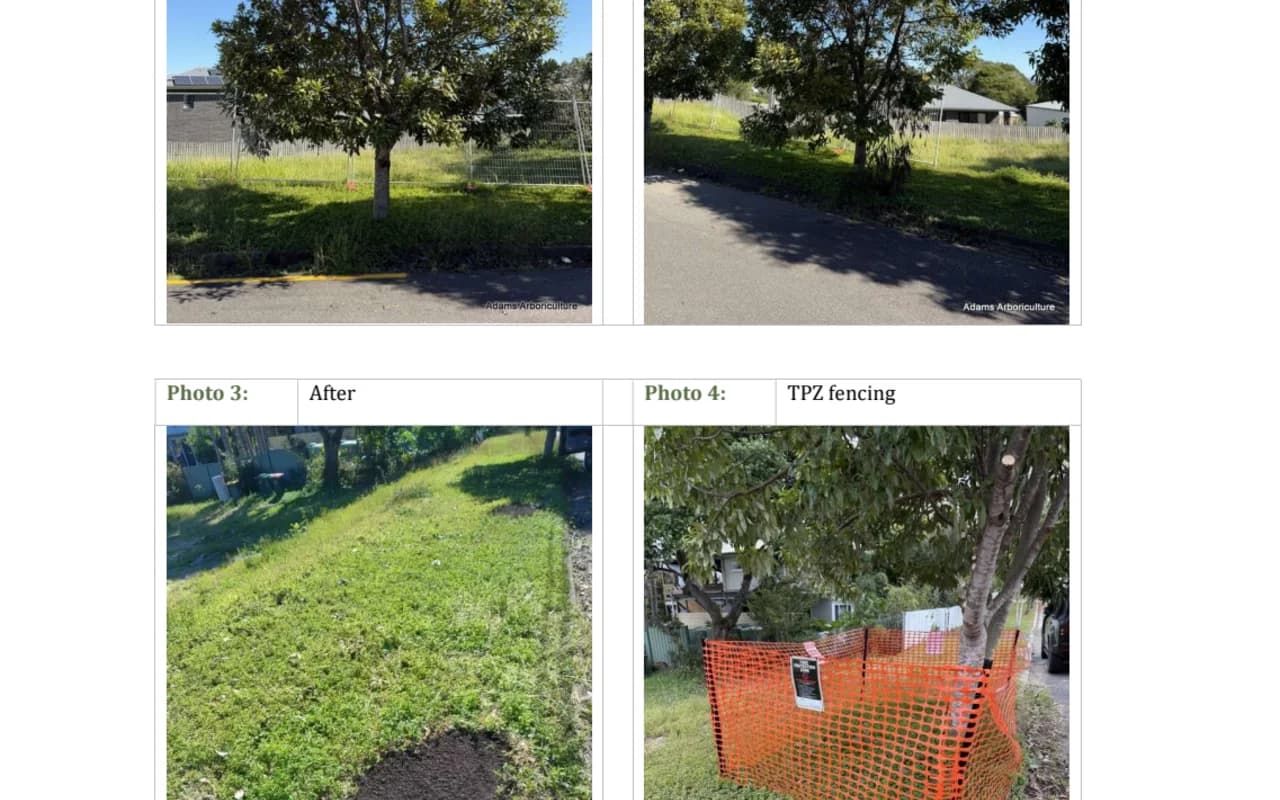
- What protection is requiredIf the tree is being retained through works, how that is achieved.
Who can write it
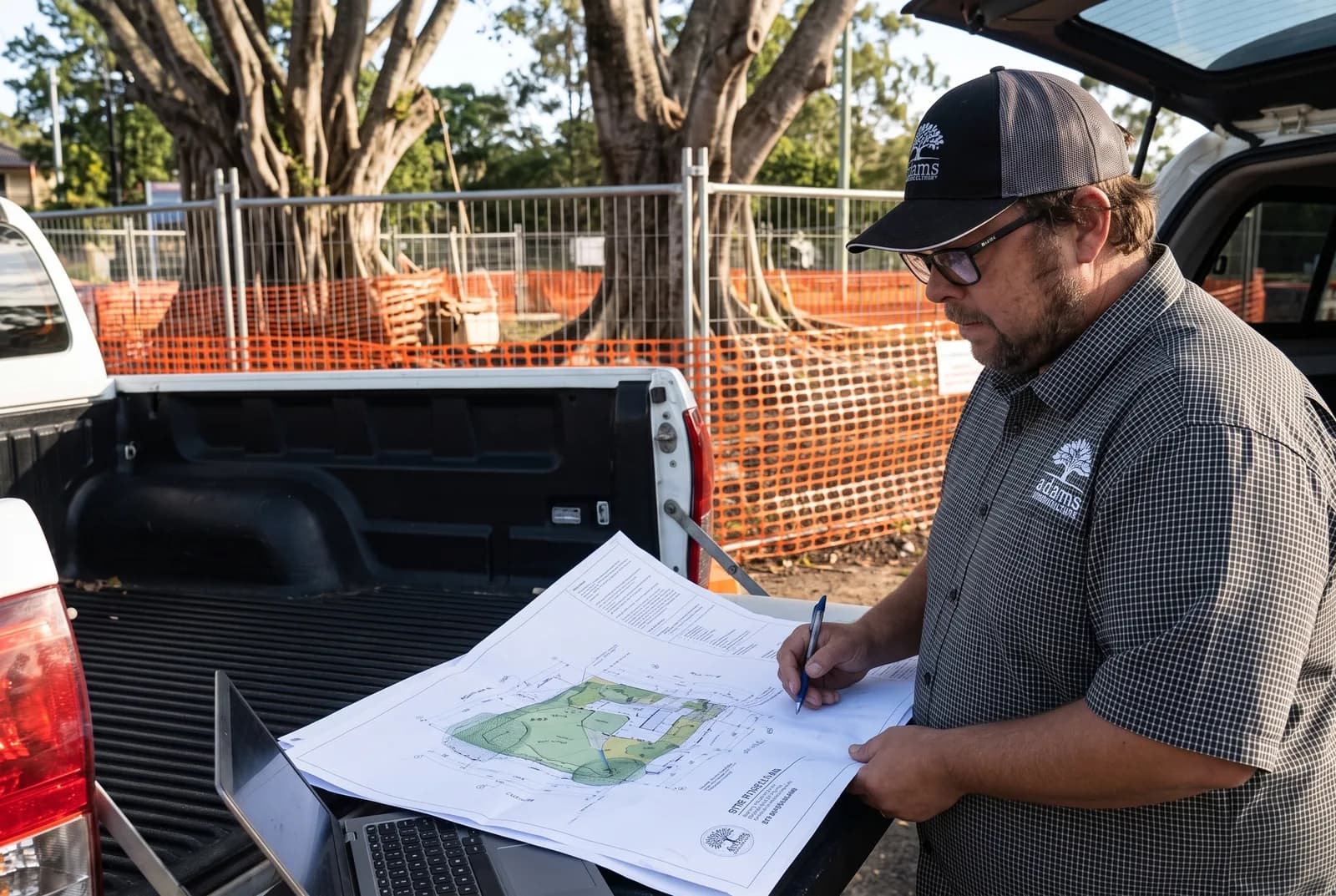
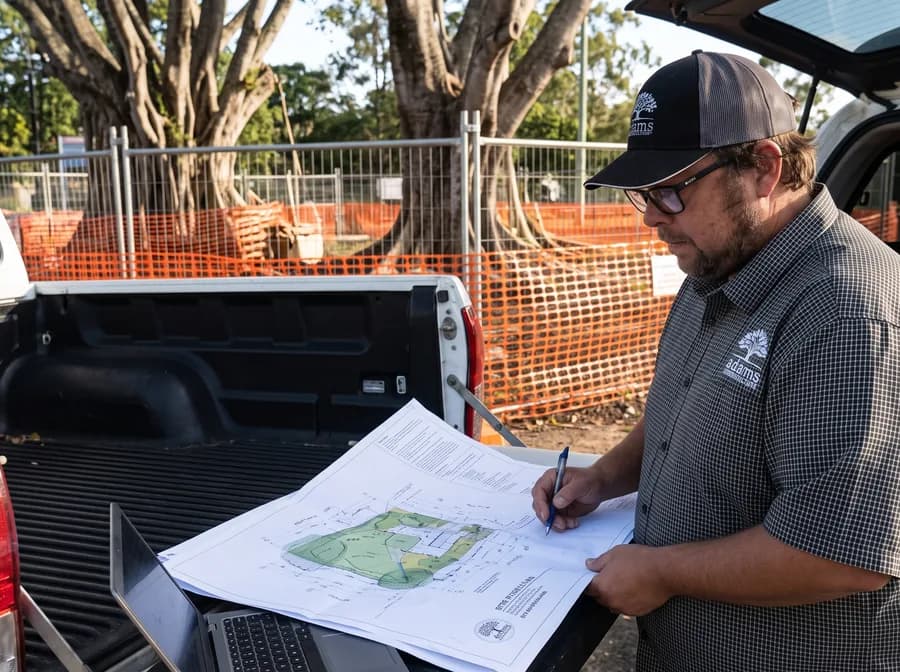
Councils and approvals across South East Queensland commonly specify a suitably qualified arborist, and in practice that generally means AQF Level 5 — the consulting-level qualification. Some conditions name it explicitly.
Adam holds AQF Level 5, a Diploma of Arboriculture, and QTRA Licence No. 6712. Where the application type allows it, he can also prepare the supporting material and lodge on your behalf, then handle council queries or a request for further information.
What often comes after
Approvals for works to protected vegetation frequently carry conditions that outlast the works — most commonly that an arborist inspects the completed work and certifies it.
Depending on what the approval names, that may be a Completion Report, a Final Arborist Report, an Arborist Certification Report, or a Declaration of Compliance for Approved Works to Protected Vegetation. They are not interchangeable, and the condition is not discharged until the named document is provided.