
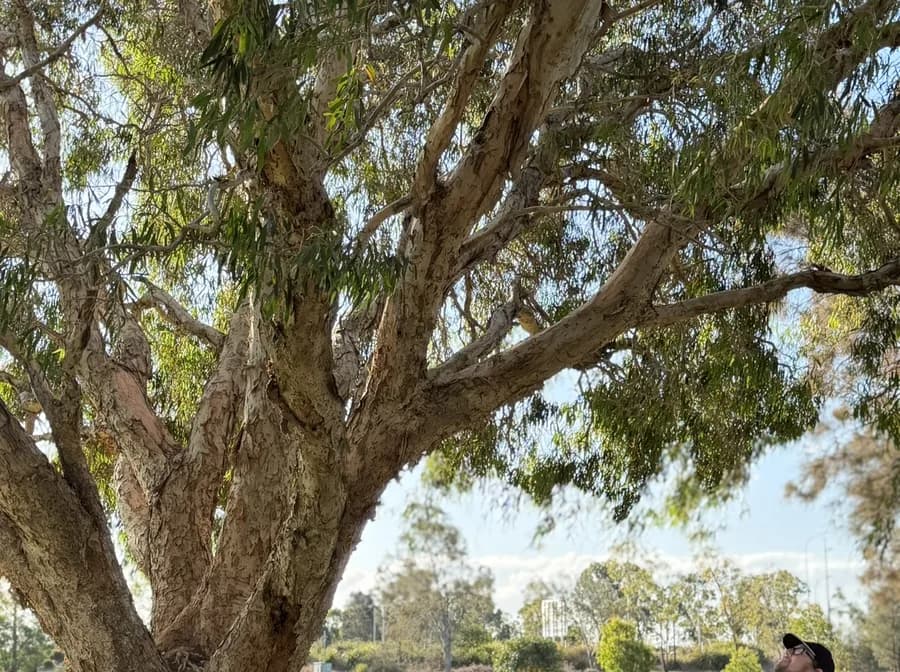

Why the calculated zone is not enough
The Notional Root Zone is a calculation from a trunk measurement. It is a consistent, defensible starting point, and it is not a map of where a particular tree's roots are.
Real root systems follow water, oxygen and the path of least resistance. They run further under a driveway than through compacted clay, they turn along a service trench cut thirty years ago, and they are frequently asymmetric for reasons nobody on site can see. A proposal that looks marginal against the calculated circle can be entirely workable, or considerably worse than it appears, and the only way to know is to look.
That matters most where the difference decides something expensive: whether a footing can go where it is drawn, whether a service can cross, whether a tree can be retained at all.
How the investigation is done
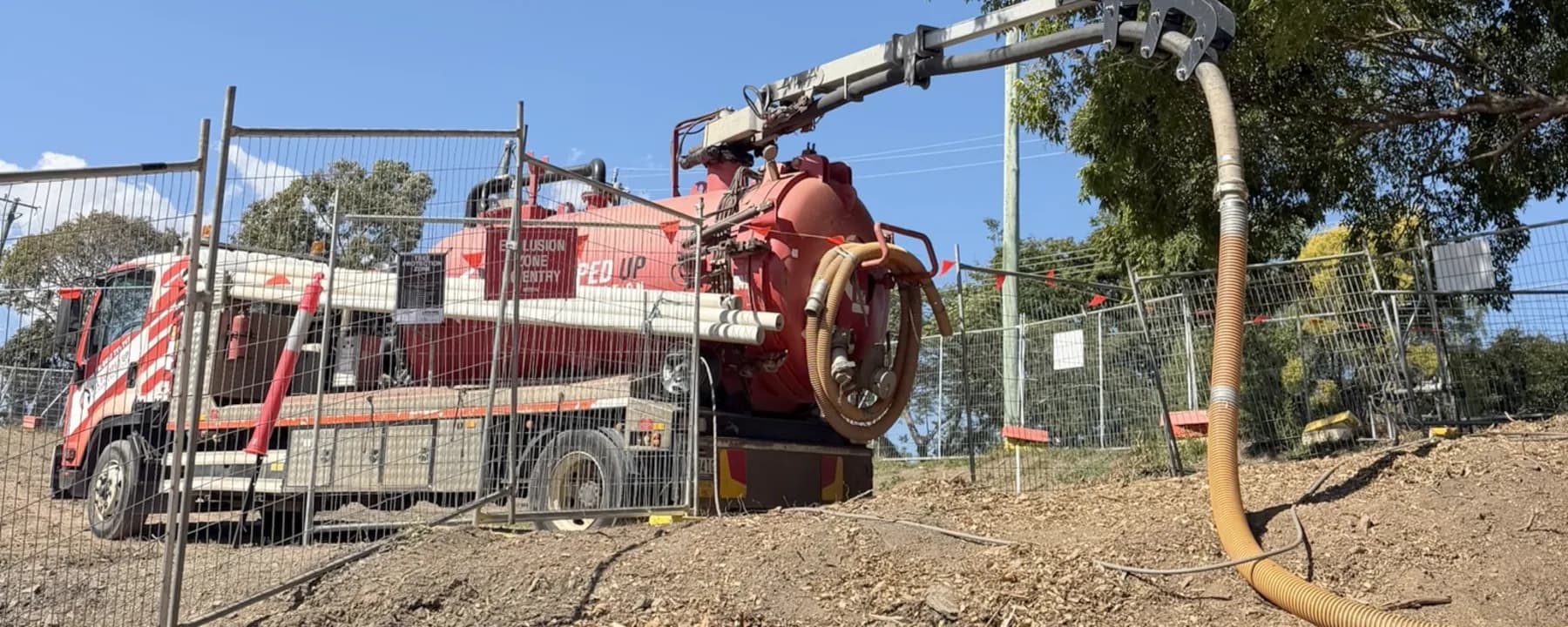
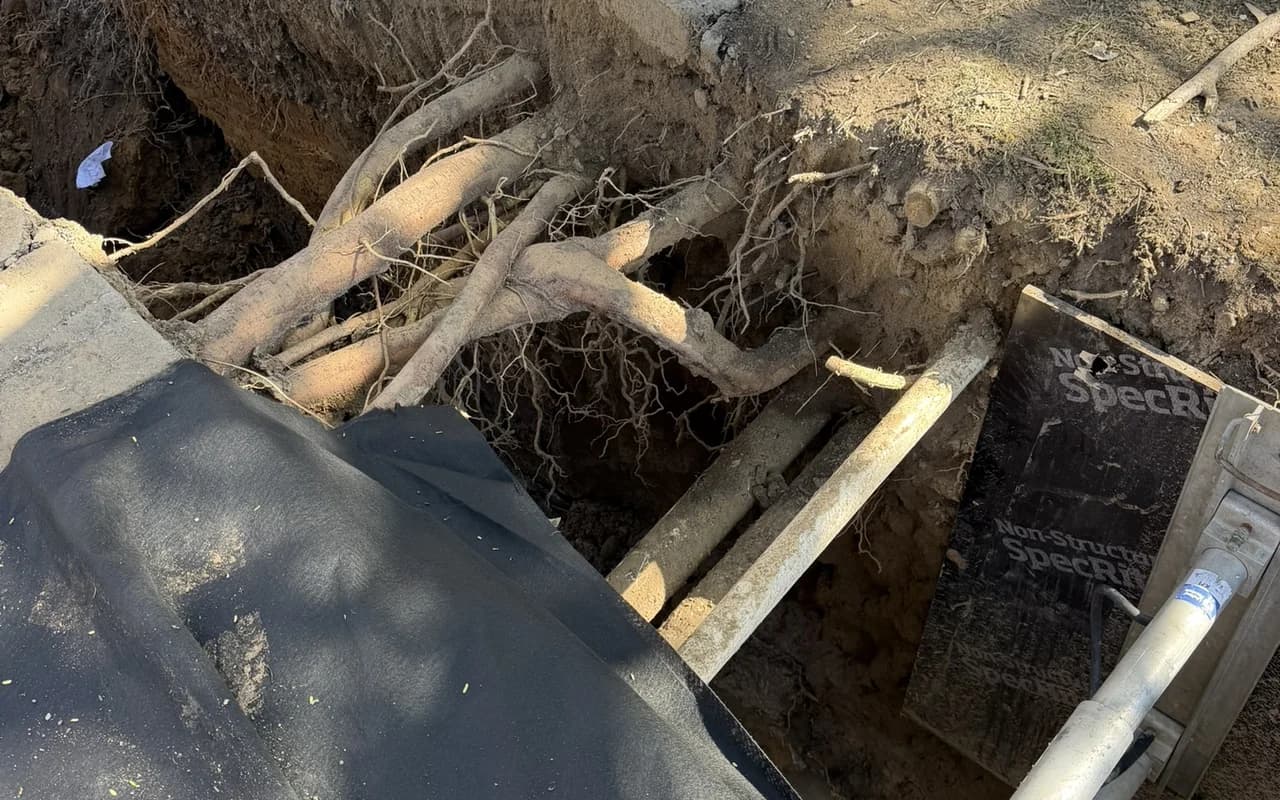
Non-destructively. Hydro-excavation or air knife strips soil away from roots without cutting them, so the root system can be examined intact and then covered back over. Hand excavation does the same at smaller scale.
The point is that the investigation itself does not cause the damage it is trying to avoid. A trial trench dug with a machine to find out whether roots are present has already destroyed whatever it found.
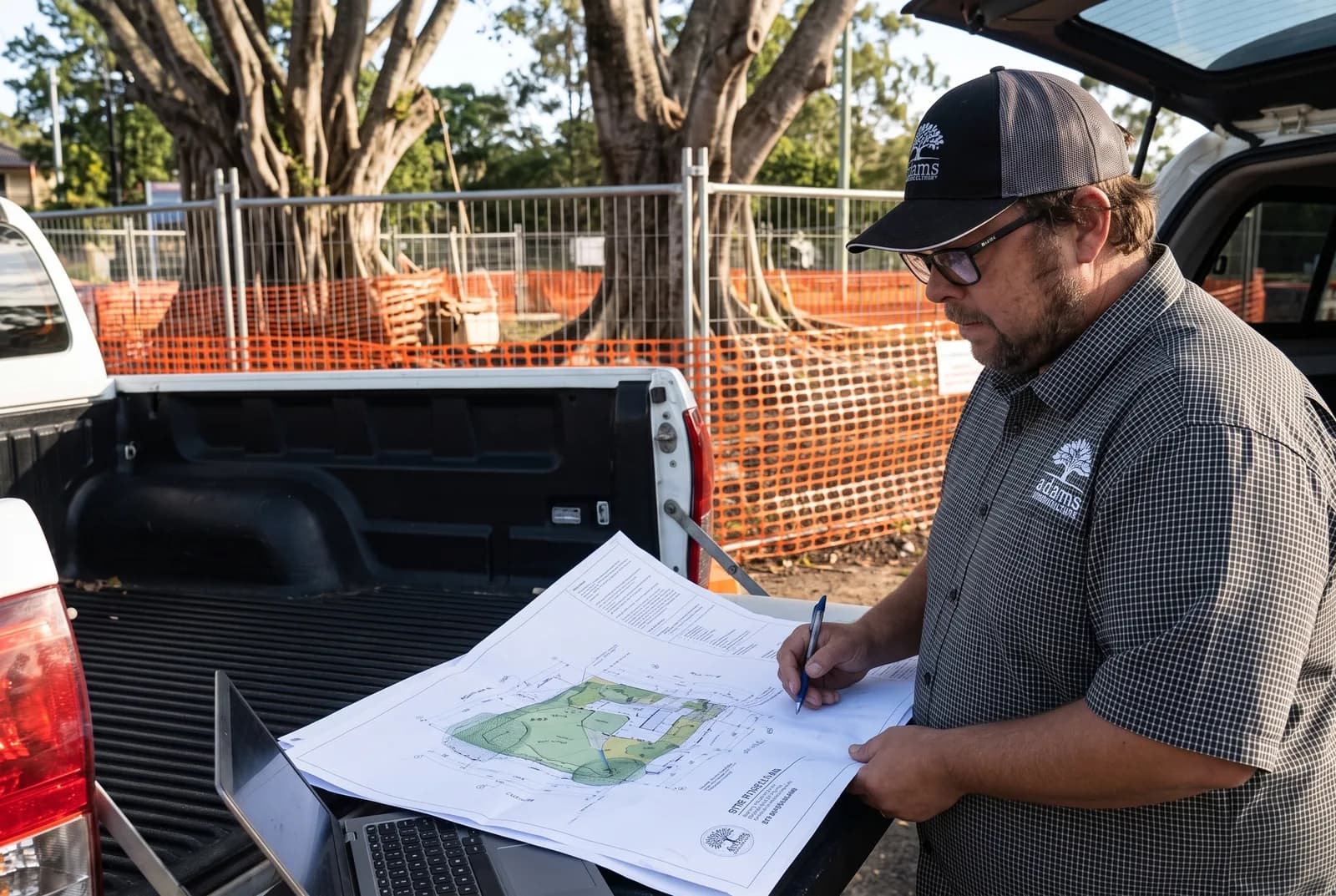
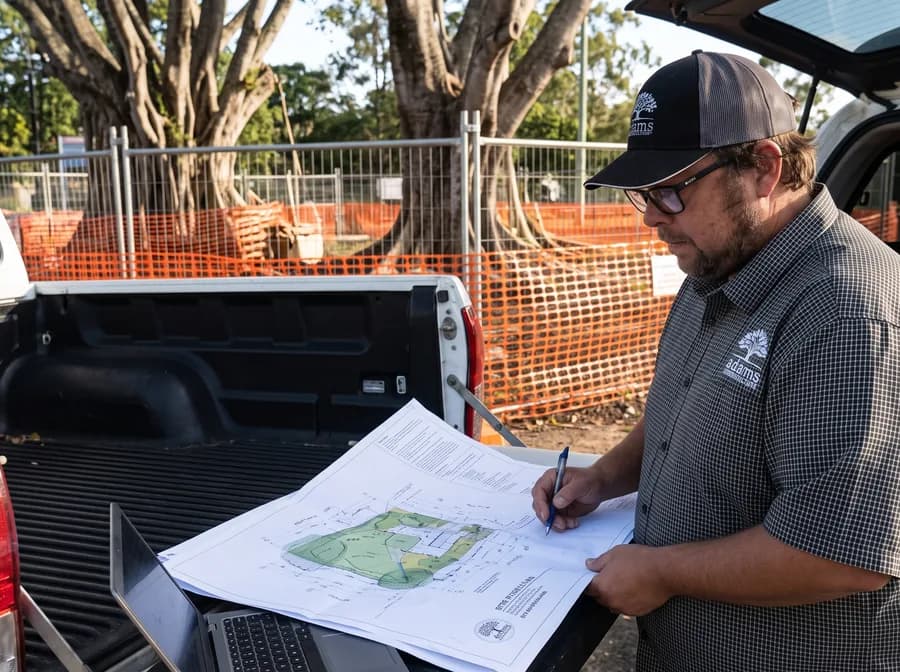
Adam attends and supervises this work. Where the excavation is carried out by others — a vac-ex contractor, or the site crew — the supervision is the arborist directing what gets exposed, reading what is found, and deciding what happens next.
What it tells you
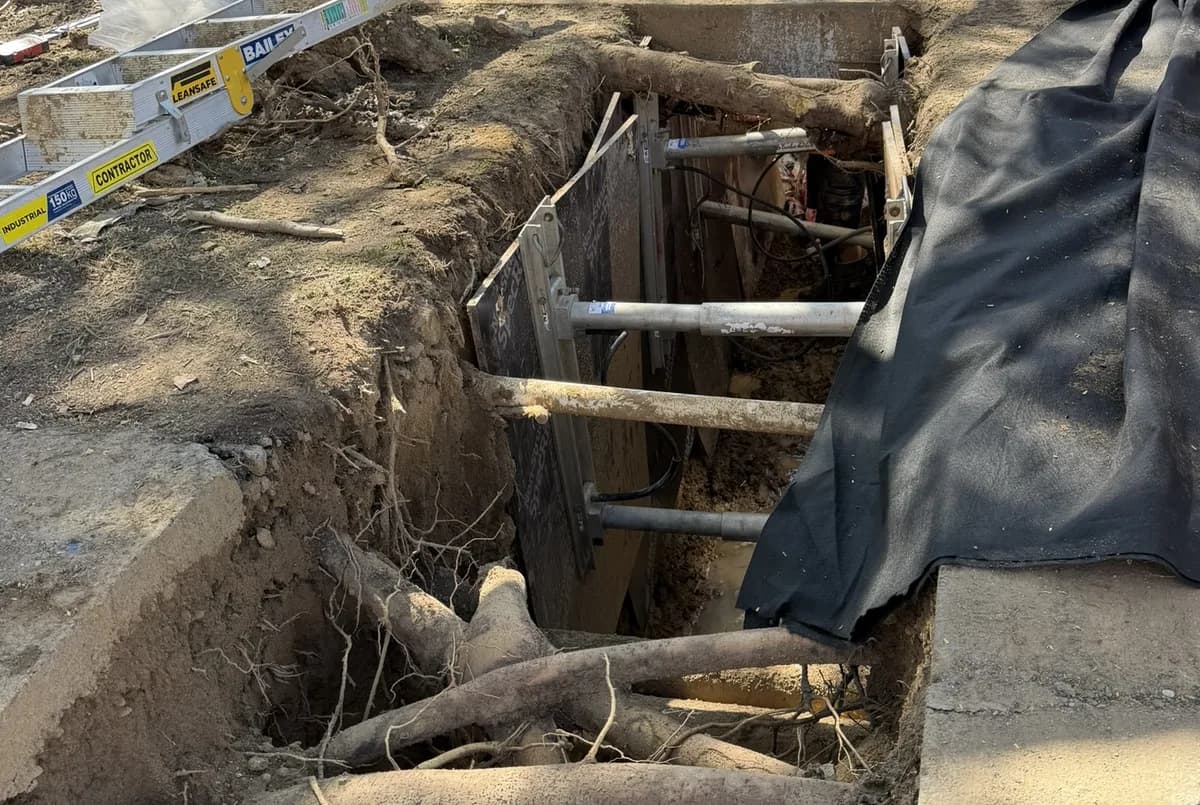
Where the structural roots are, and therefore where the Structural Root Zone genuinely sits rather than where the formula puts it. Whether the roots in the line of the proposed works are structural or absorbing. How large they are, how many, and what cutting them would mean.
- Root presence and distributionWhether roots are actually in the area of the proposed works, and on which side.
- Structural versus absorbing rootsThe distinction that decides whether an impact is manageable or serious.
- Whether the alignment can shiftOften a small change in position or depth resolves the whole problem.
- What pruning would involveWhich roots, what diameter, and what the tree is likely to do afterwards.
- Evidence for the approvalA record of what was found, where a condition requires the works to be justified.
Root pruning, where it is appropriate
Where roots have to be cut, cutting them properly matters. A clean cut at the right point behaves differently from a root torn by a bucket, and which roots can be taken — and how many — is an arboricultural judgement rather than a construction one.
Root pruning is specialist work that belongs to the consulting role, and Adam carries it out as part of that role. It does not extend to general tree contracting: no removals, no lopping, no general pruning.
Where roots have already been cut, an investigation still has value. It establishes what was lost, which determines what the tree needs now and whether retention is still realistic.