Not all fungi are the same news
Fungi are everywhere in a healthy landscape and most of them are doing useful work. Some live on dead material — a buried stump, old mulch, a fallen limb — and say nothing at all about the living tree beside them.
Others are decay fungi, and they consume the wood the tree relies on structurally. Those matter, because a tree can lose a significant proportion of its structural wood while looking entirely normal from the outside.
A third group are pathogens that attack living tissue directly, producing dieback, cankers or root disease. The response differs across all three, which is why identification comes before anything else.
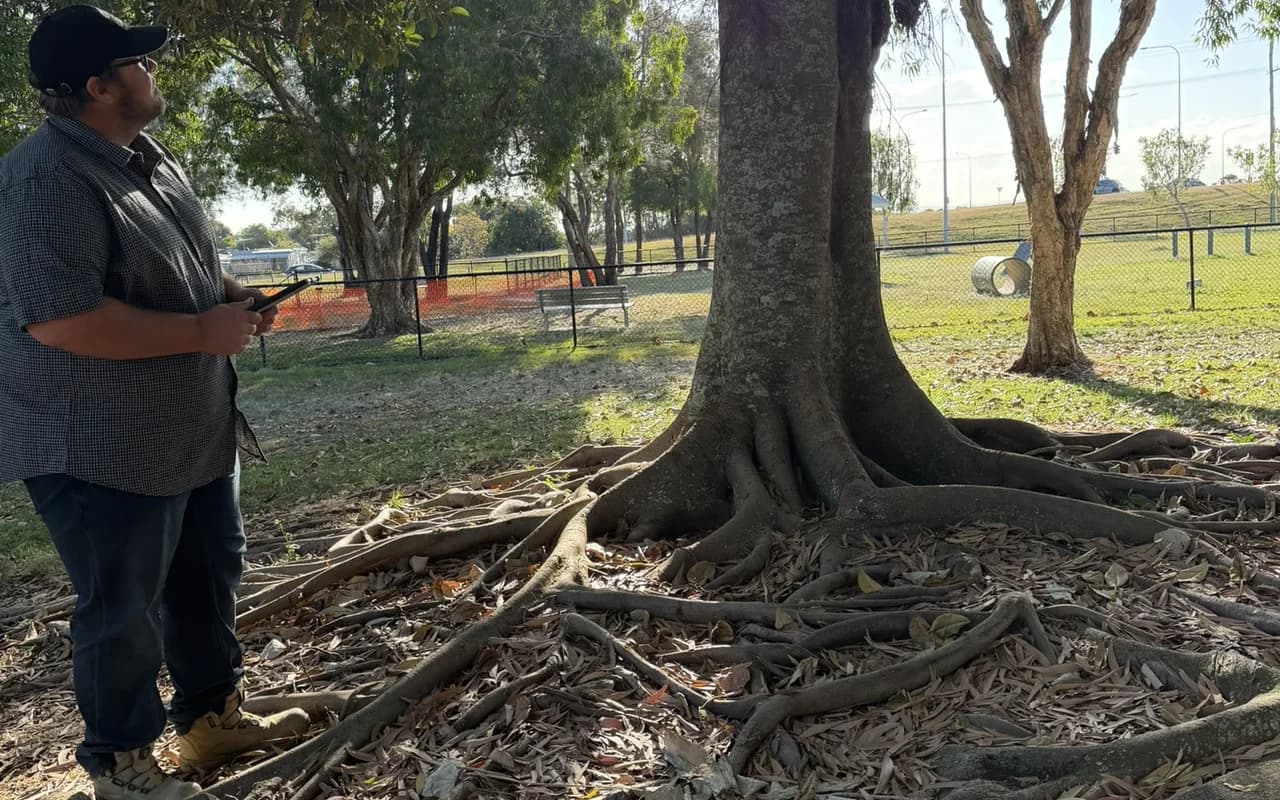
A fruiting body is the visible part of something that has usually been present far longer. Its appearance is information about timing, not about when the process started.
What is worth reporting
You do not need to identify anything — that is the assessment. What helps is noticing and recording.
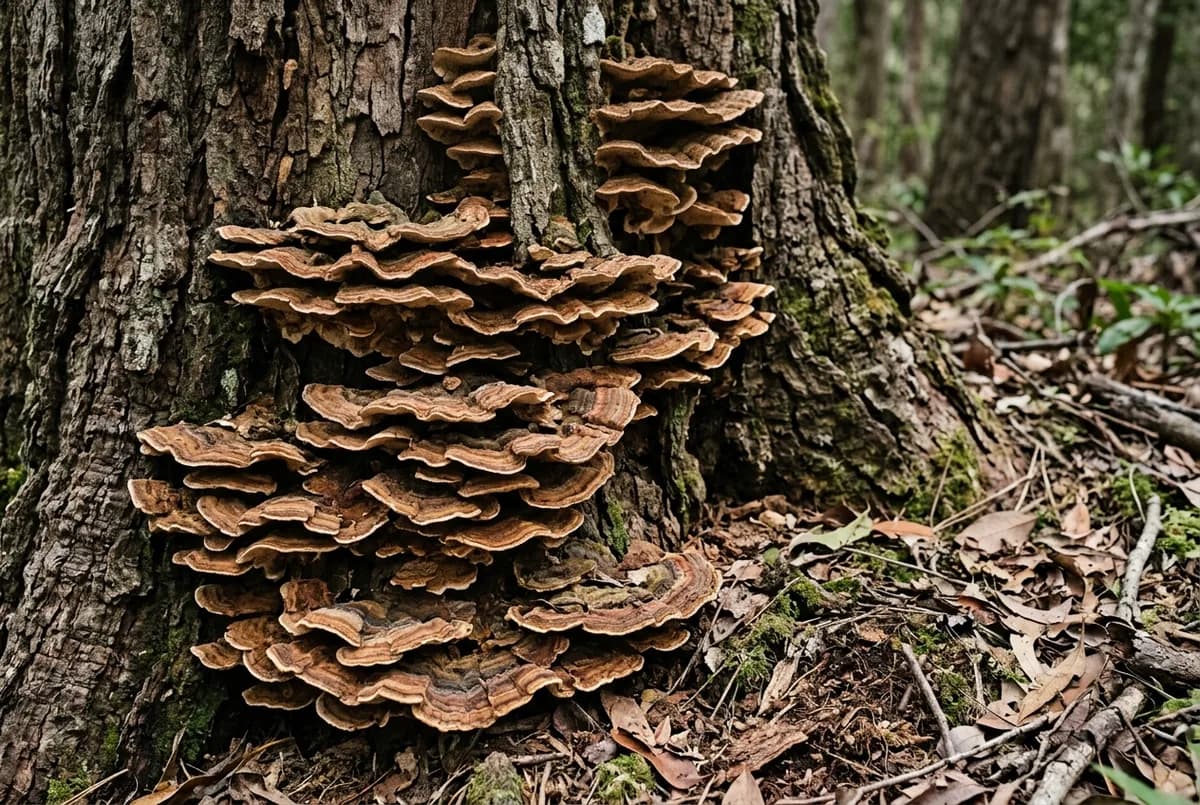
- Where it is growingAt the base, on the trunk, on a major limb, or in the soil nearby. Position matters a great deal.
- What it looks likeBracket, shelf, mushroom, crust, or a mass at ground level. Photographs are ideal.
- When it appearedMany fruit seasonally, so a first appearance and a recurrence are different facts.
- What the canopy is doingDieback, thinning or early leaf drop alongside a fruiting body is a more significant combination.
- Any wounds or old damagePruning cuts, storm damage, mower or whipper-snipper damage at the base, or excavation nearby.
What the assessment establishes
What is present, whether it is acting on living tissue or dead, and what that means for this tree in this position. Where decay is involved, the structural implication is assessed rather than assumed — a decay fungus is a reason to look properly, not a conclusion on its own.
Where something cannot be resolved from a visual inspection, further investigation is recommended rather than guessed at.
What can and cannot be treated
Some pathogens respond to treatment. Adam carries out antifungal treatments where they are appropriate to the diagnosis, as part of the consulting role.
Decay already present in structural wood does not reverse. Nothing puts wood back, and any product suggesting otherwise is selling something. What can be done there is managing the tree — monitoring, adjusting what is beneath it, reducing loading where appropriate — or, where the assessment supports it, removal.
Often the most effective intervention is not a treatment at all but changing the conditions that let the problem establish: drainage, compaction, mulch, or stopping the mechanical damage at the base that opened the door in the first place.
This site does not publish treatment protocols or product names. What is appropriate depends on the diagnosis, the species and the situation, and a recipe on a webpage would be a bad way to decide it.