Redlands · consulting arboriculture
Consulting arborist working across Redlands
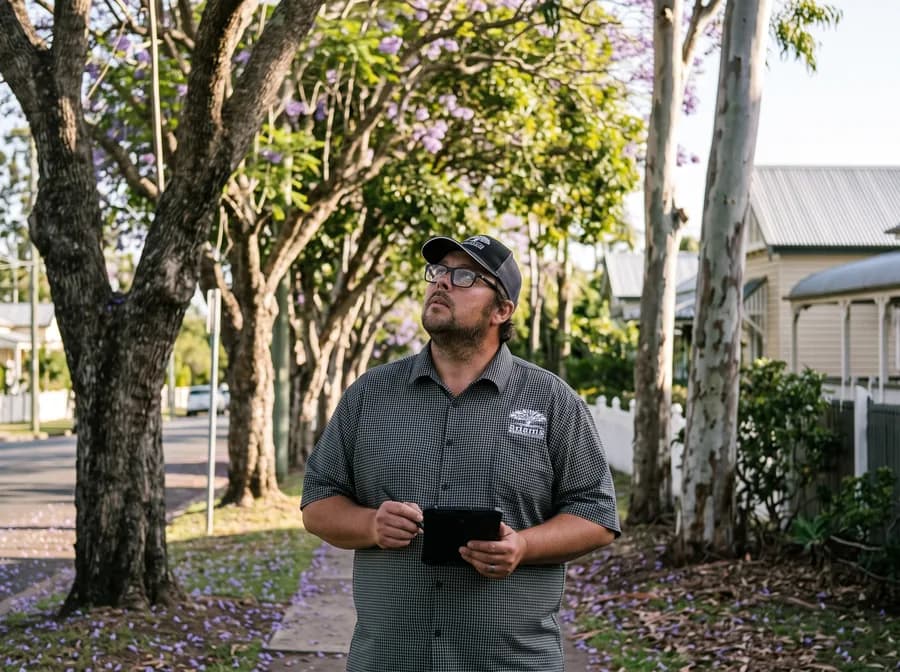
Redlands is a saltwater environment with a serious habitat overlay, and both of those change what a tree assessment is actually looking at. Adam De Regt is an AQF Level 5 consulting arborist — independent of any tree contractor, and engaged for the assessment and the document rather than the work that follows.
0415 105 592Call 0415 105 592or send the details across
Send the property address
An address in Redlands is often enough to establish what is involved before anything is commissioned.
The trees here
What grows in Redlands, and what that means on site
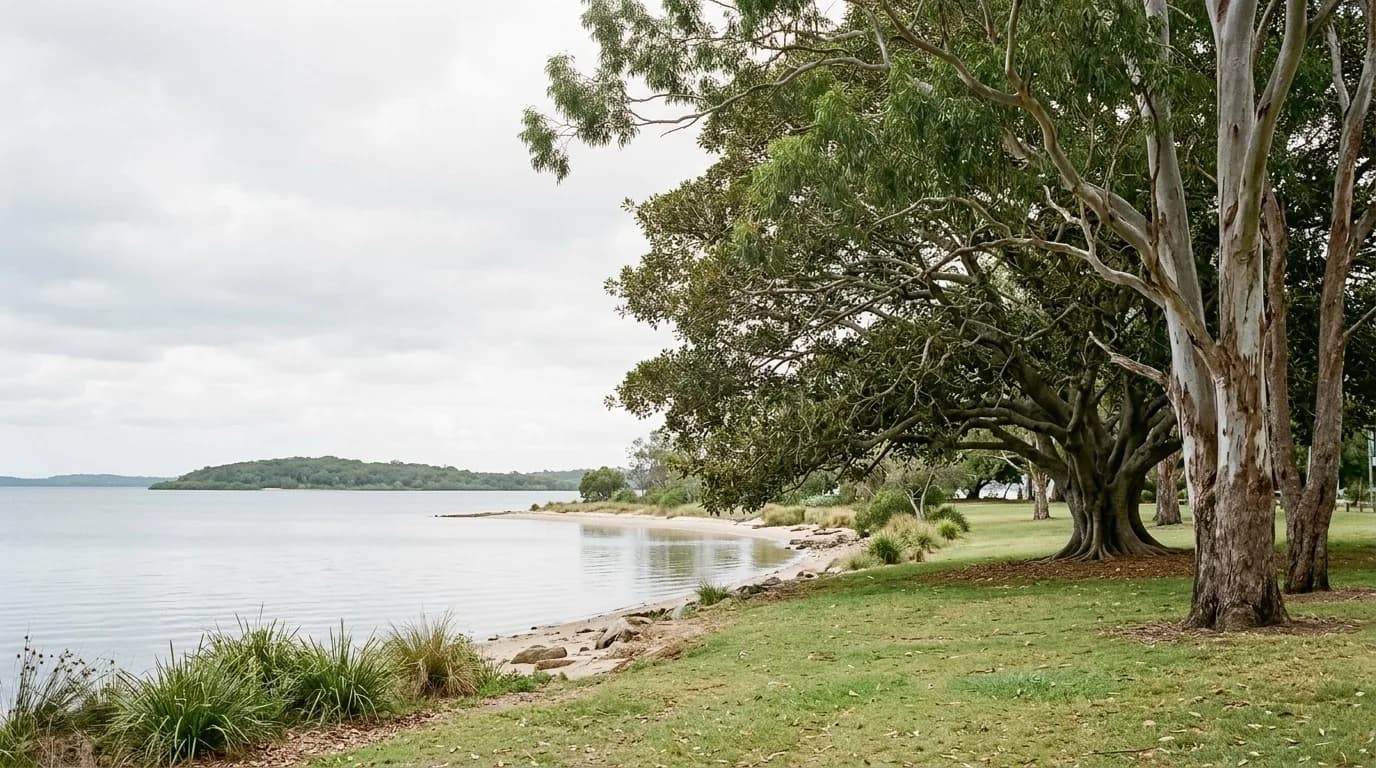
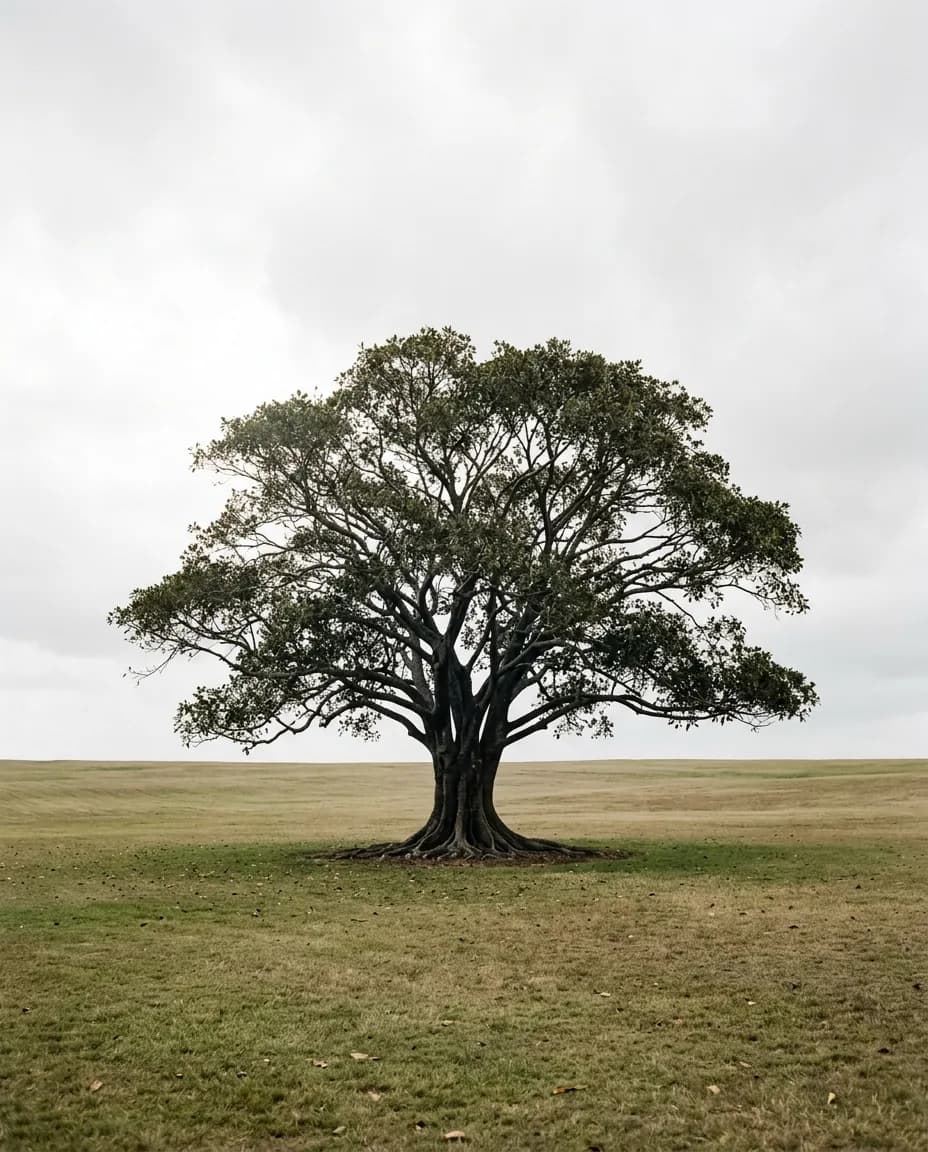
The foreshore reserves carry very large Moreton Bay and weeping figs, swamp mahogany, and she-oaks along the shoreline itself. Salt exposure, sandy free-draining soils and consistent onshore wind produce trees with a distinct form — asymmetric canopies, wind-trained leaders, and root plates shaped by loose substrate rather than clay.
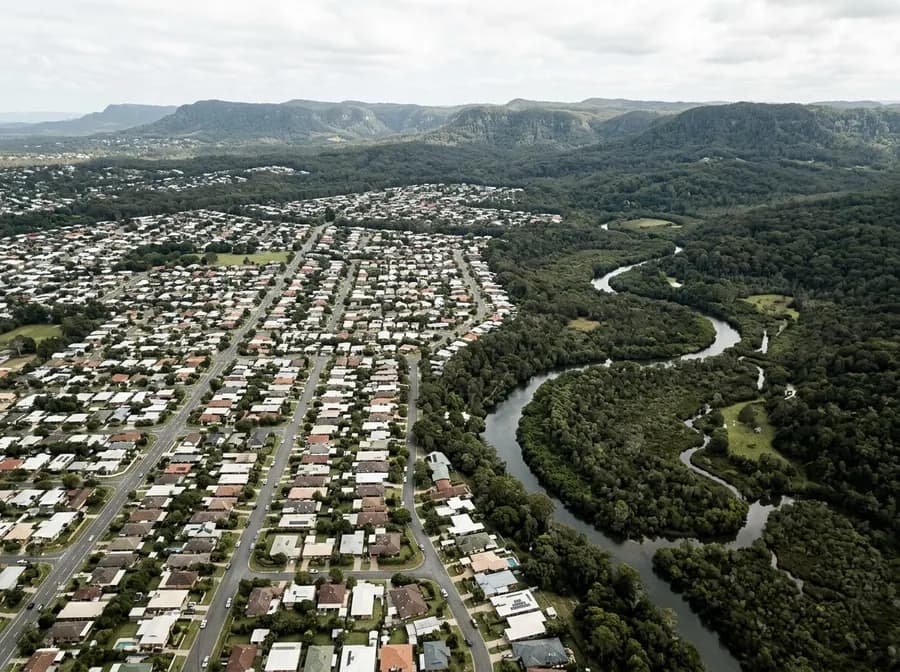
Inland of the foreshore, the eucalypt forest through Alexandra Hills, Thornlands and Redland Bay is significant koala habitat, and that is a live planning consideration in this council area rather than a background fact. Whether a tree is a habitat tree and what it contributes to a corridor are assessed alongside its condition, not instead of it.
The council area also takes in the bay islands. Access there is by ferry or barge and works differently to a mainland engagement, so it is worth raising at the enquiry rather than after a visit is booked.
- BaysideCleveland, Ormiston, Wellington Point, Birkdale, Victoria Point.
- InlandCapalaba, Alexandra Hills, Thornlands, Redland Bay.
- Bay islandsPart of the council area; access is by ferry or barge — raise it at enquiry.
How it runs
What happens after you send the address
The shape of an engagement in Redlands is the same as anywhere else Adam works. What changes locally is what the trees are doing and which council determines it.
- 01
The enquiry, and what it settles
The address, what you are proposing and any condition you have already received. That is frequently enough to establish which report type applies — and occasionally enough to establish that you do not need one, which is a better outcome than a report you did not require.
- 02
The site visit
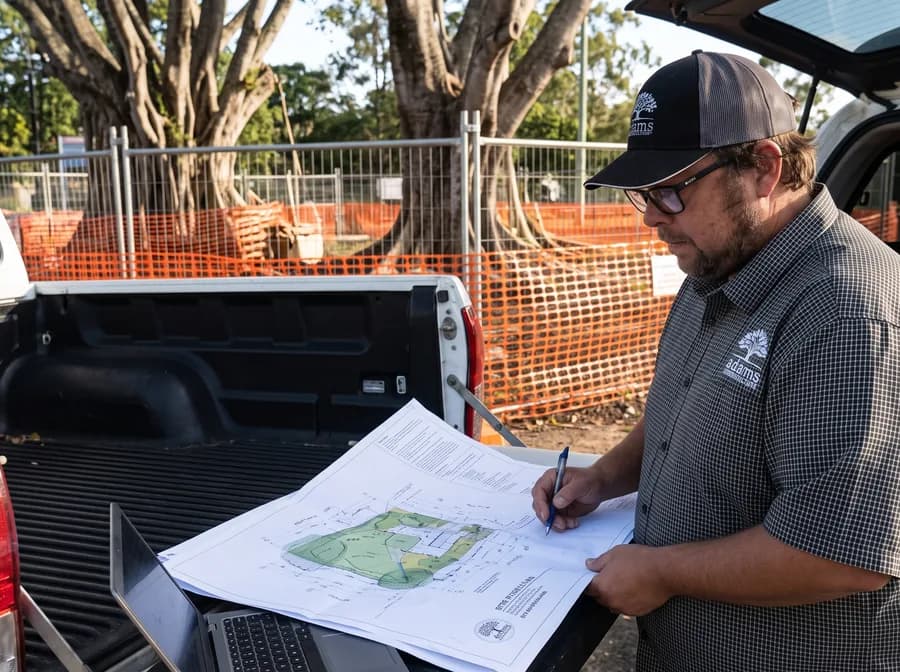
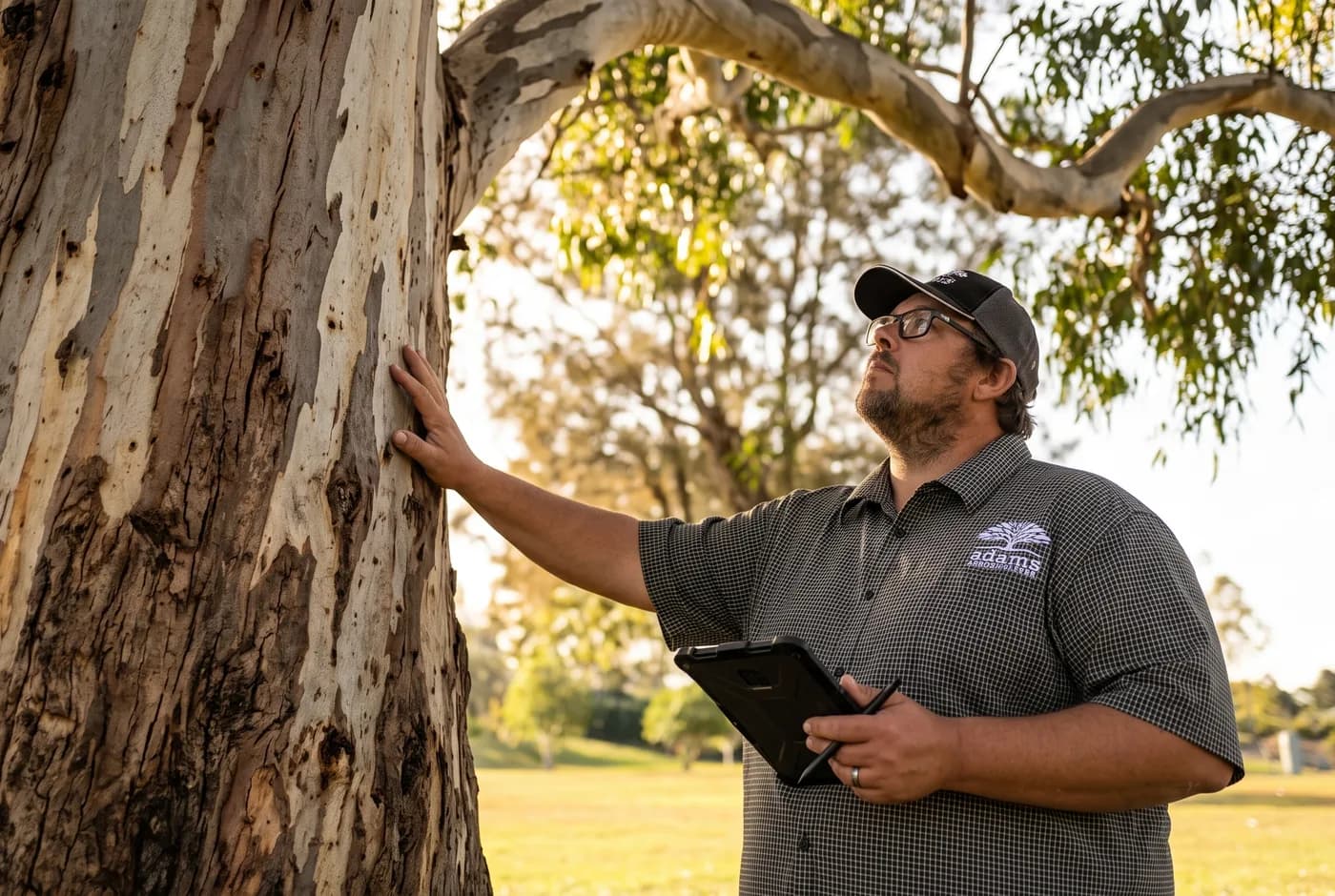
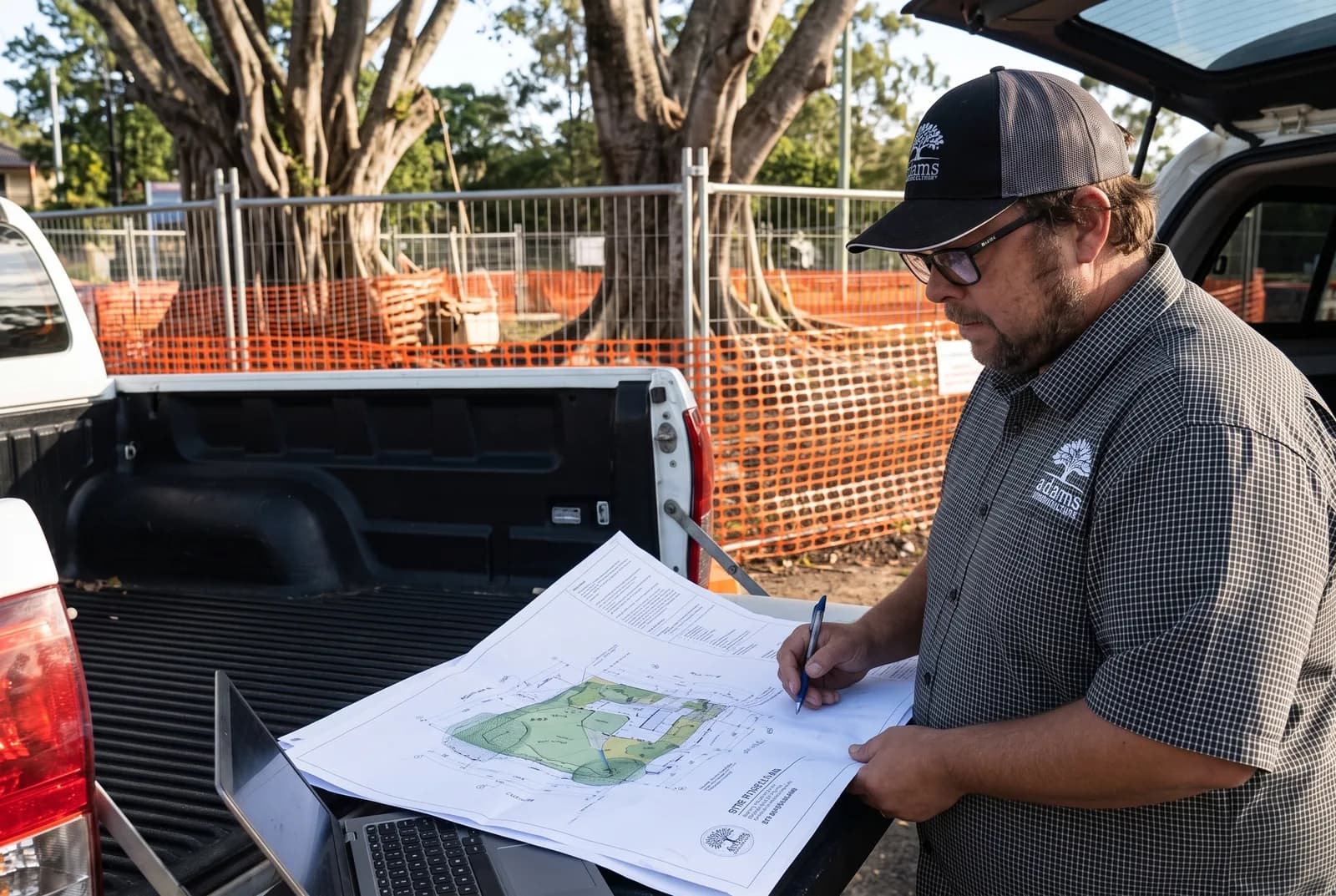
Adam attends the property in Redlands and inspects the tree. Measurements are recorded rather than estimated — diameter at the correct height, canopy spread, the defects actually present — because everything downstream is calculated from those numbers.
- 03
The report
Prepared to the requirement that applies, using the document name that requirement uses. Where Redland City Council is involved, that means the terminology the council itself uses rather than a generic report retitled.
- 04
Follow-through
Where an application allows it, Adam can lodge on your behalf and handle council queries. Where an approval requires supervision during works or certification once they are finished, that is part of the same engagement rather than a new one.
What Adam is engaged for
Four ways the work arrives
The same four services everywhere Adam works. Which one applies is set by what you are proposing, not by which suburb you are in.
Arborist reports
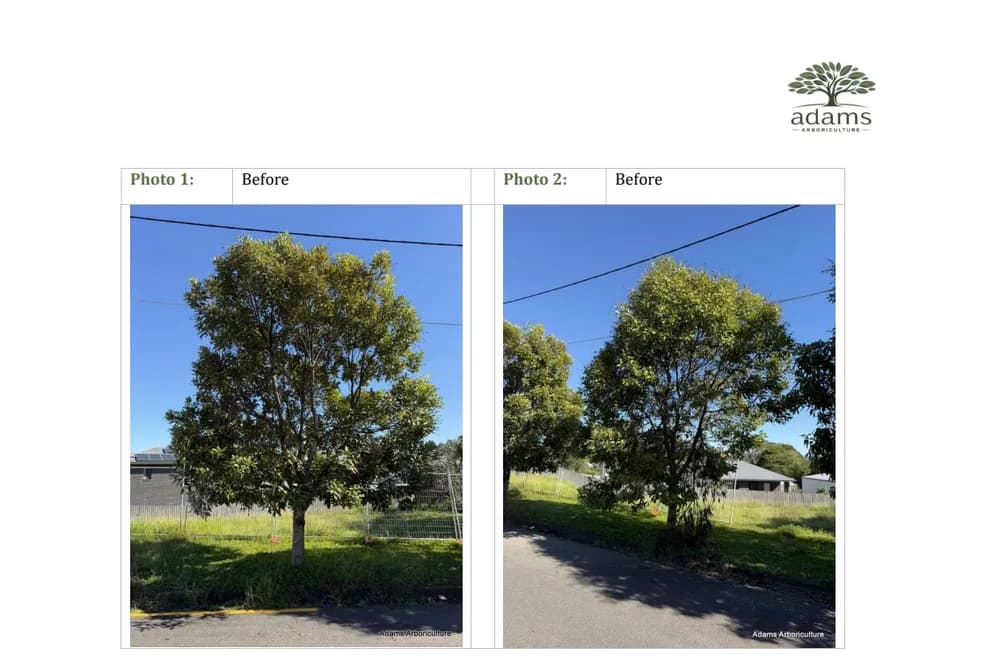
The report your council, certifier or approval actually asked for, named correctly.
Read more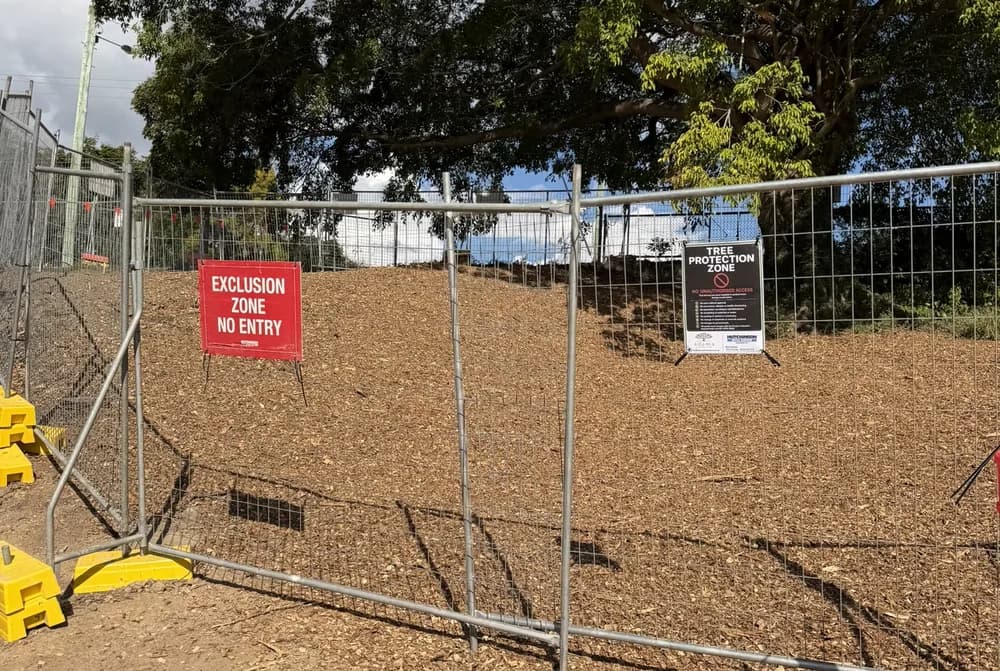
Development arboriculture
From pre-DA advice through protection and supervision to completion certification.
Read more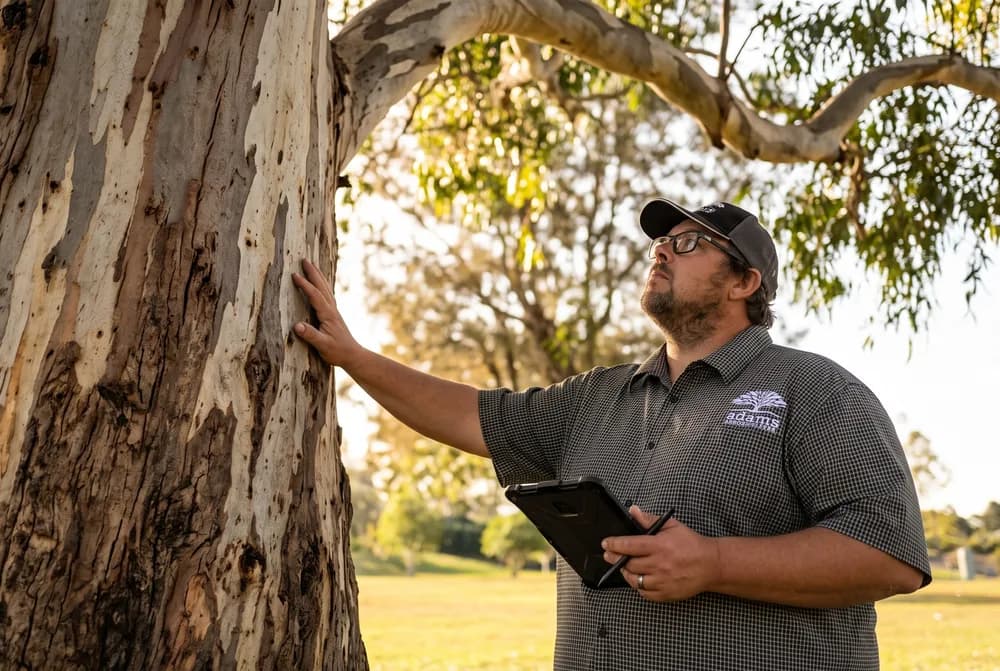
Tree assessment
Condition, structure and risk, recorded from measurement rather than impression.
Read more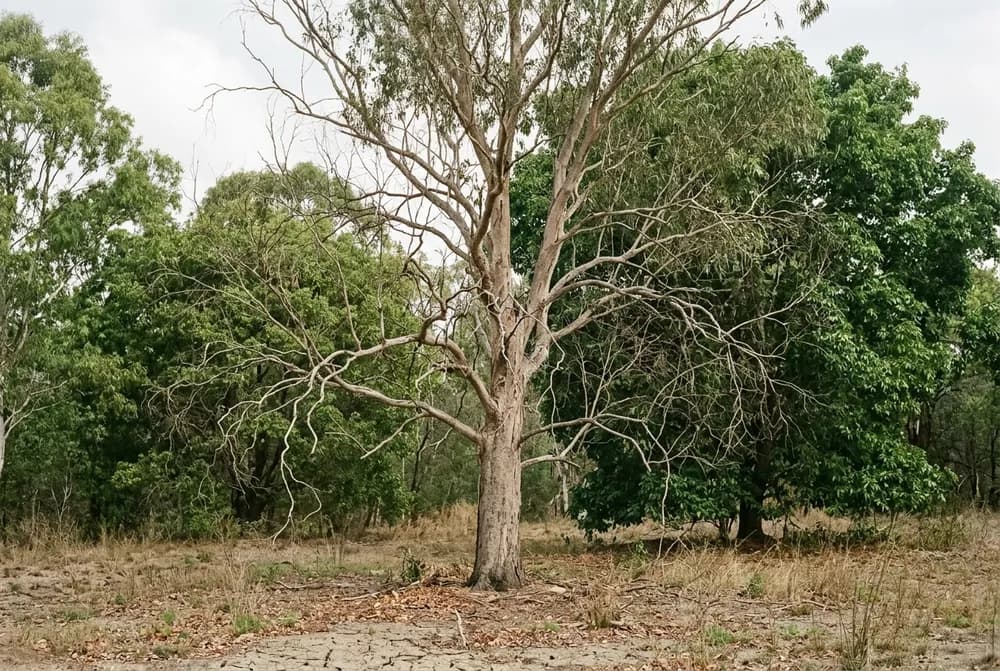
Plant healthcare
Why a tree is declining, and whether anything can be done about it.
Read more
The other six
Where else Adam works
Seven areas across South East Queensland, each falling under a different council and a different instrument. The area page covers the place; the council page covers the approval.
Common questions
Working in Redlands
It is assessed for an additional thing. Habitat value sits alongside condition and structure rather than replacing them, and a tree can matter for what uses it regardless of how it scores on amenity. What is present gets recorded; what follows from that is the council's determination.
Asymmetry in a salt-exposed foreshore tree is common and is not automatically a defect — it is frequently just the shape wind and salt produce. Whether it is that or genuine dieback is the difference between a tree that needs nothing and one that needs work, and it is not reliably told apart from a distance.
Yes — Redlands sits inside the ordinary service area, which runs north to about Noosa, south to about Helensvale and west to about Ipswich. Work outside those bounds is considered for suitable projects rather than assumed.
That is a check against the address and Redland City Council mapping rather than a judgement about the tree, and it frequently does not need a site visit. It is worth settling first, because if the vegetation is not protected a good deal of the question falls away.
No, and that is deliberate. This is a consultancy — the assessment, the report and the supervision. Adam holds no stake in the physical work that follows, which is what allows the recommendation to be whatever the tree warrants rather than whatever generates a job.
Contact
Send Adam the address and he will take it from there
For many protected vegetation questions, the property address is enough to start checking. Call, or send the details below.