The asymmetry
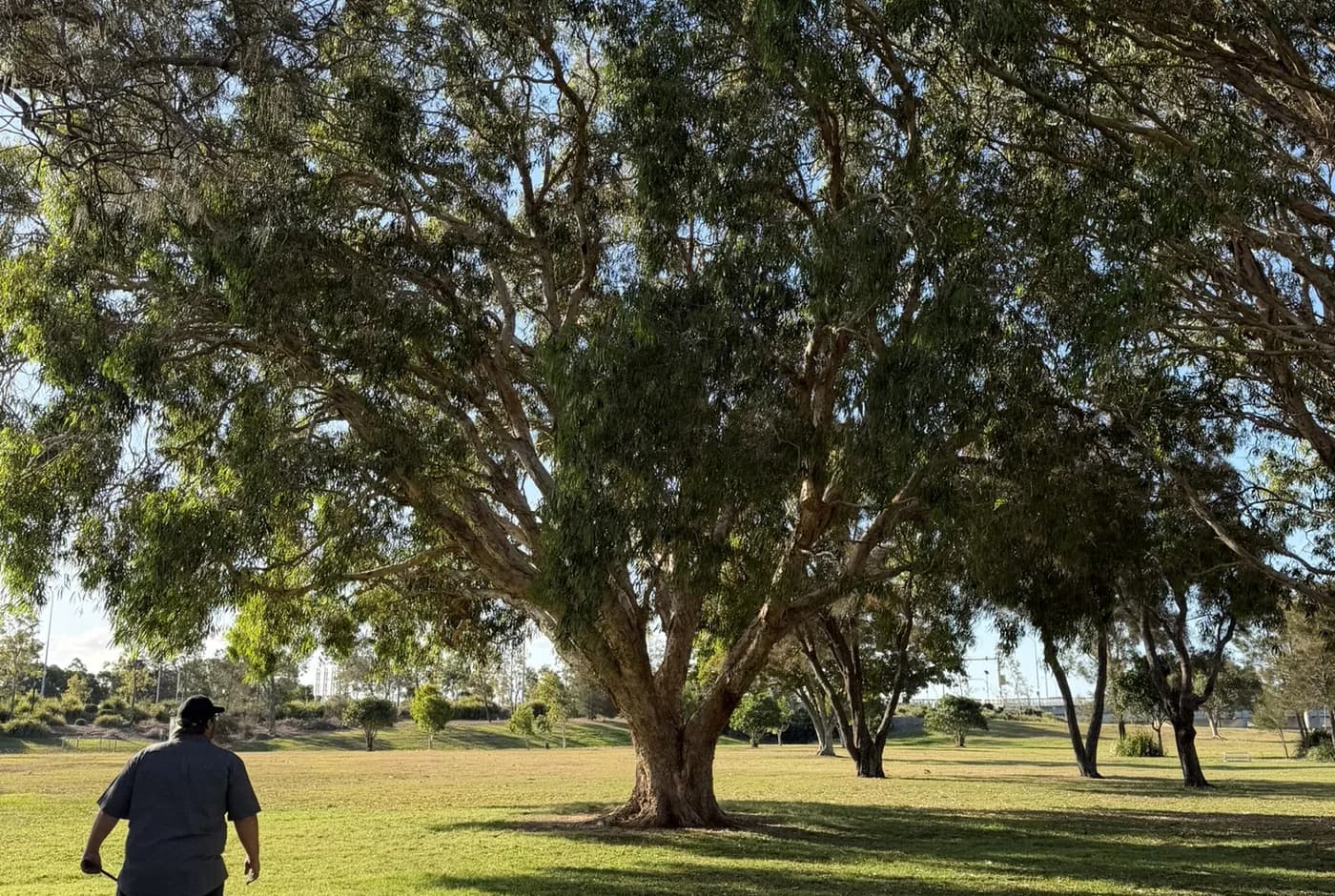
Consider the same fact — a mature tree on the boundary carries a root zone extending eight metres into the site — arriving at four different moments.
At concept, it is a line on a sketch and the layout moves around it in an afternoon. At detailed design, it is a revision. After lodgement, it is a request for further information and a resubmission. During construction, it is a stop, an investigation, and a conversation about whether what was approved is achievable.
The fact never changed. Only the cost of receiving it did, and it rose by roughly an order of magnitude at every step.
Why it usually happens late
Not because anyone is careless. Because trees do not look like a constraint until someone points out that they are.
A survey plan shows a trunk position as a small circle. It does not show the root zone, which extends well beyond the canopy, or the fact that the council protects the tree, or that the proposed driveway crosses the part of the root system holding it up. None of that is visible to a design team without an arborist, and there is nothing on the drawing to prompt the question.
So the trees stay a background detail until something forces them forward — usually a council condition, occasionally an excavator.
A tree not being obviously significant is not a reason to skip the check. Protection is a function of council instruments, not of how impressive a tree looks.
What early involvement actually changes
Not just cost avoided. It changes what the project can be.
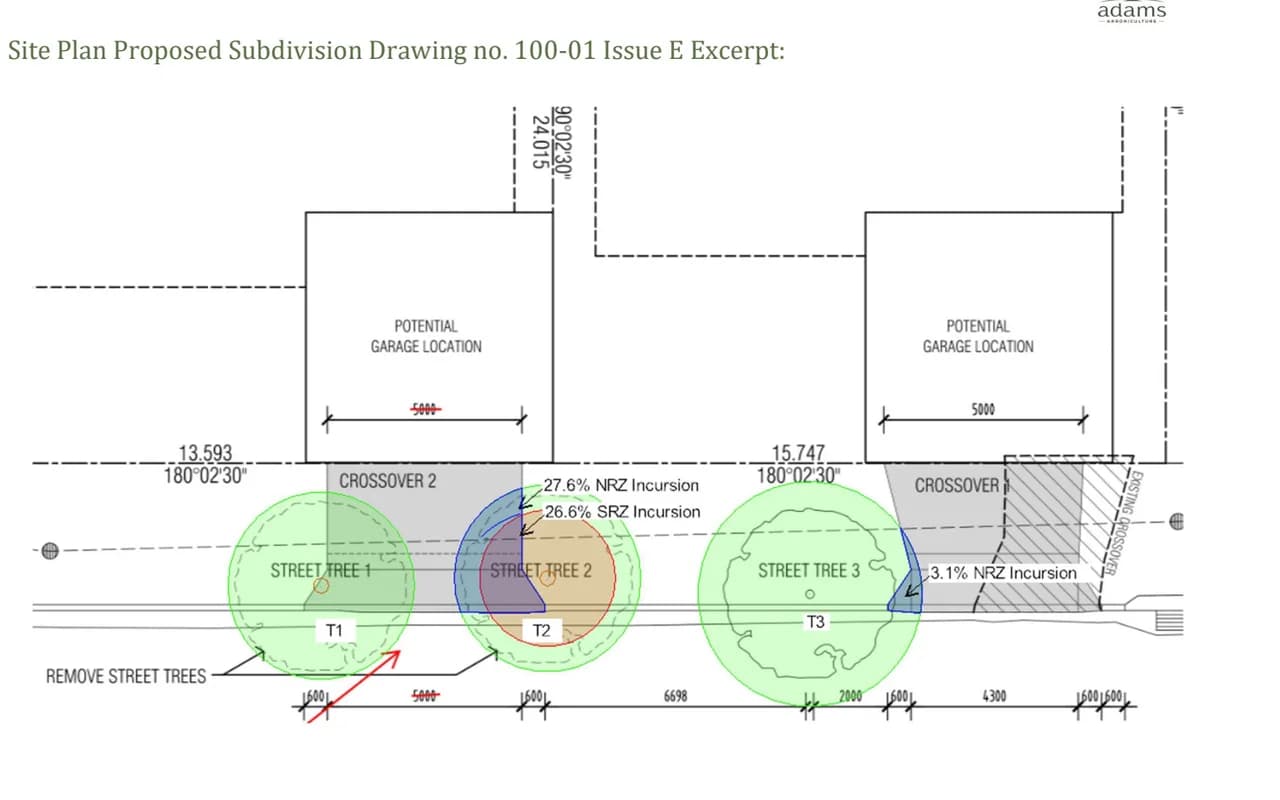
- Constraints become inputsA tree considered at concept shapes the layout. A tree considered later fights it.
- The approval pathway is knownWhat council will require stops being a surprise partway through assessment.
- Retention becomes achievableTrees can often be kept when the design accommodates them, and rarely when it does not.
- The right document gets commissioned onceRather than a report at the wrong stage followed by the one that was actually needed.
- A retained tree becomes an assetThe reason a courtyard sits where it does, instead of a problem that was solved twice.
It is not only a development principle
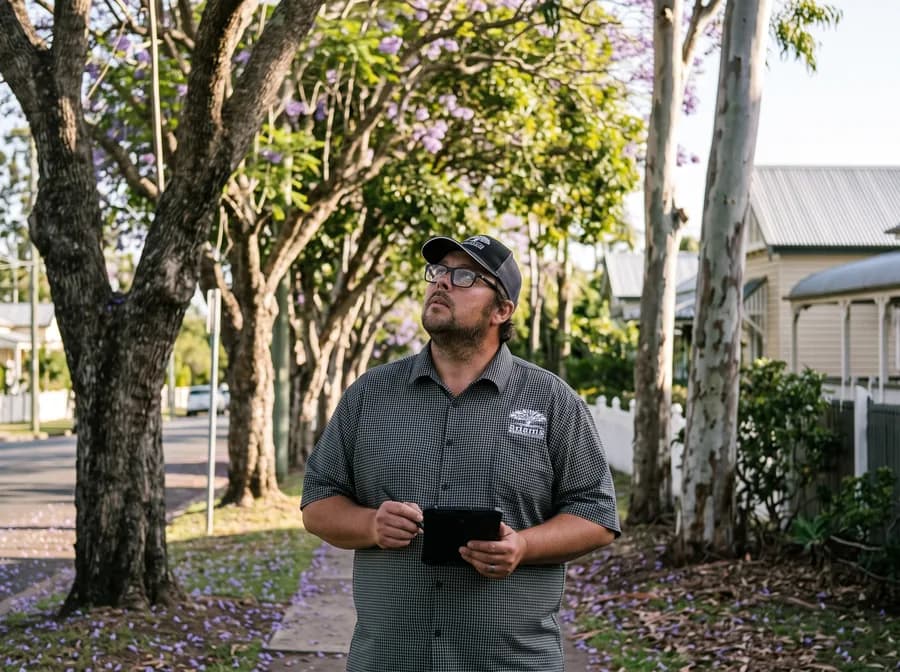
The same asymmetry applies to any works near an established tree. A homeowner about to lay a driveway, install a pool, run a service trench or change ground levels is in exactly the position a developer is in at detailed design.
Damage to a root system is not visible on the day. Compaction, cut roots and changed drainage produce decline that appears seasons later, by which point the works are finished, the cause is invisible, and the tree is treated as having simply declined.
An hour before the work is a very different proposition from an assessment two years afterwards, when the question has narrowed to whether anything can be recovered.
What early involvement looks like
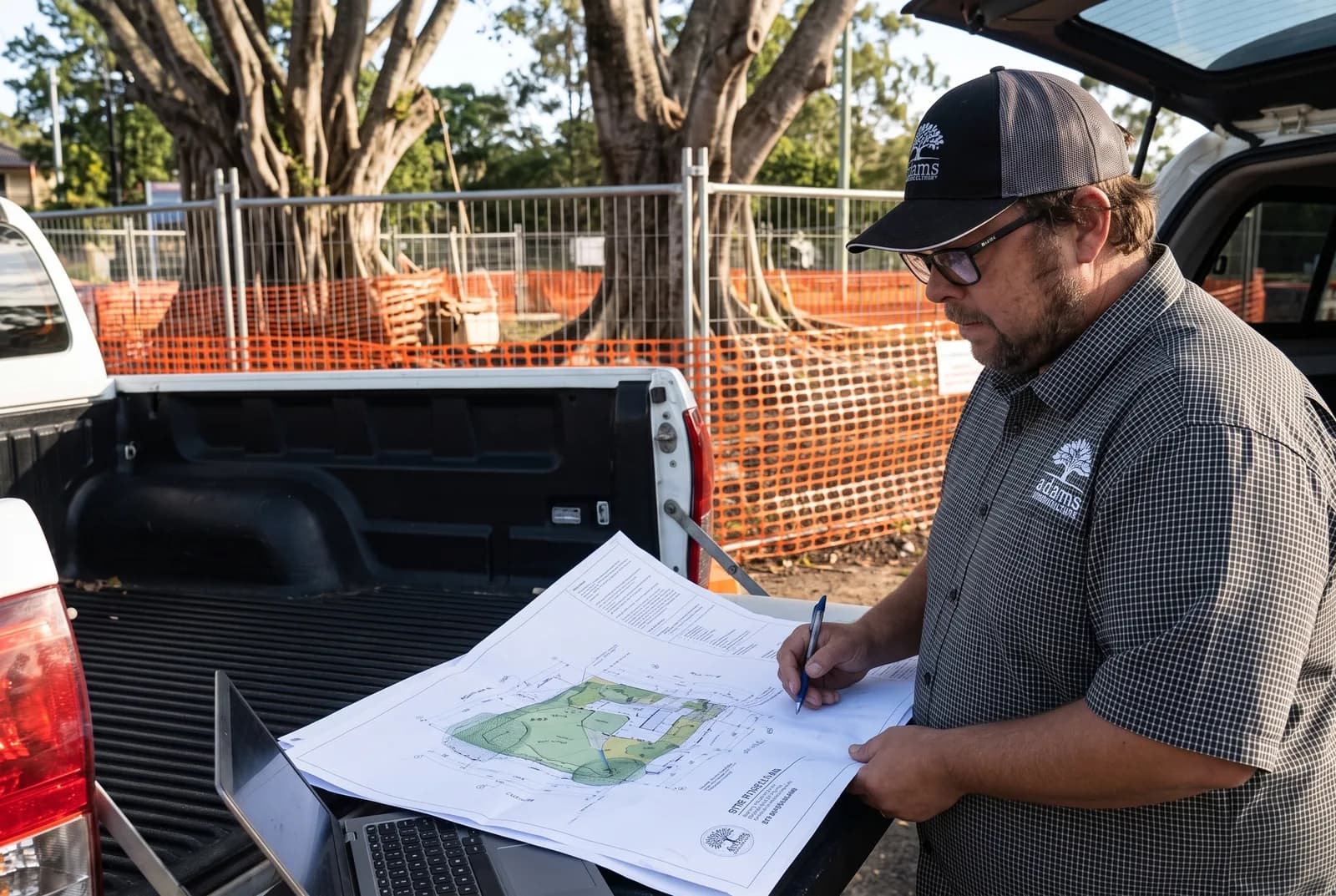
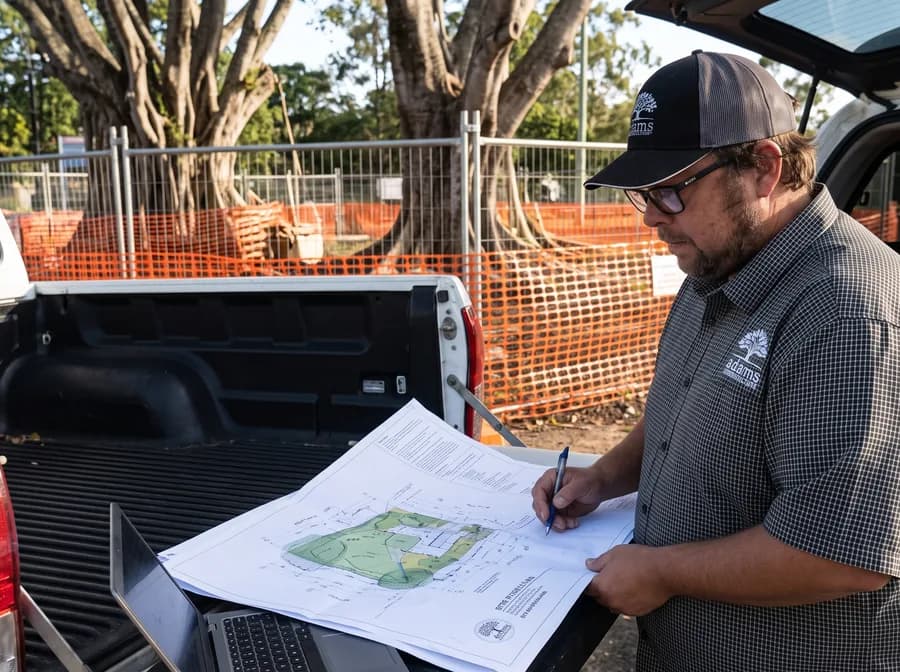
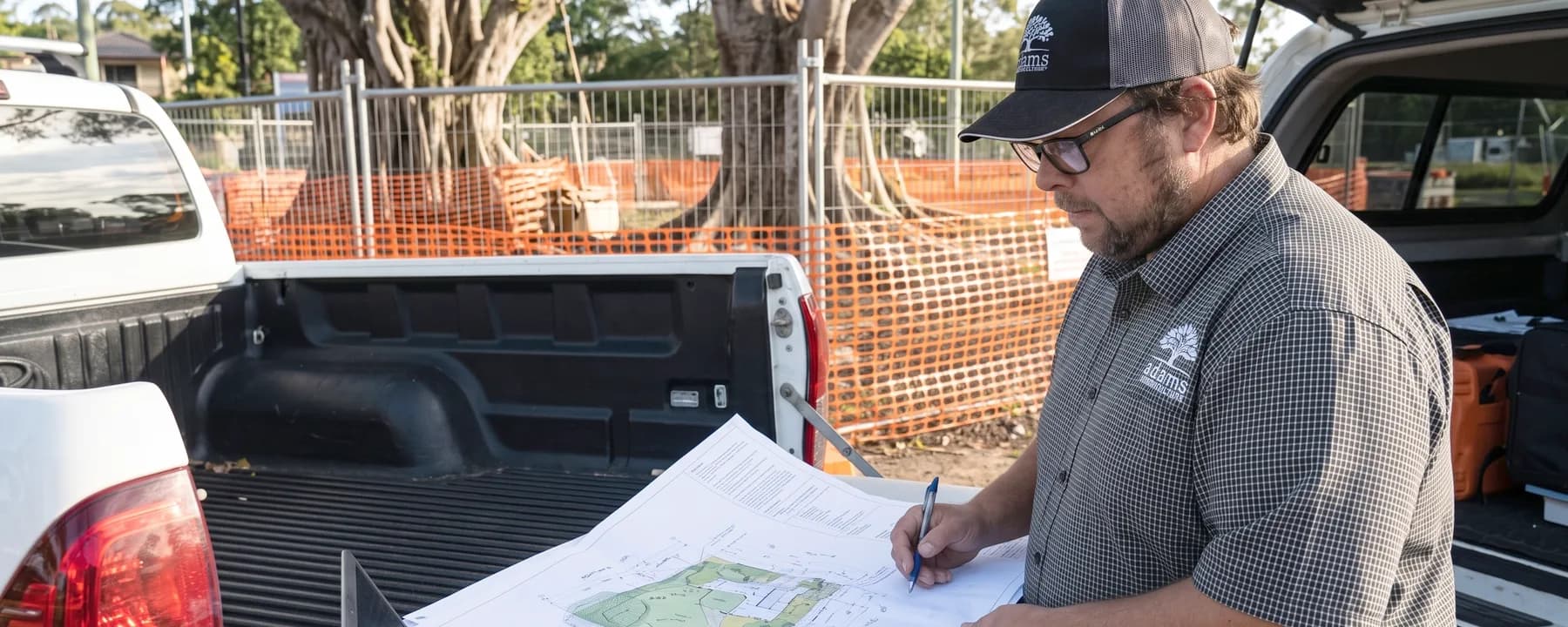
Often nothing formal at all. A site walk, a conversation, and a marked-up sketch. No report, because nothing yet requires one.
That is a deliberate feature rather than a limitation. The value at this stage is the information reaching whoever is holding the pen before decisions harden — not in a document existing. The documents come later, when the project reaches the stage that needs them.