What an AIA actually assesses
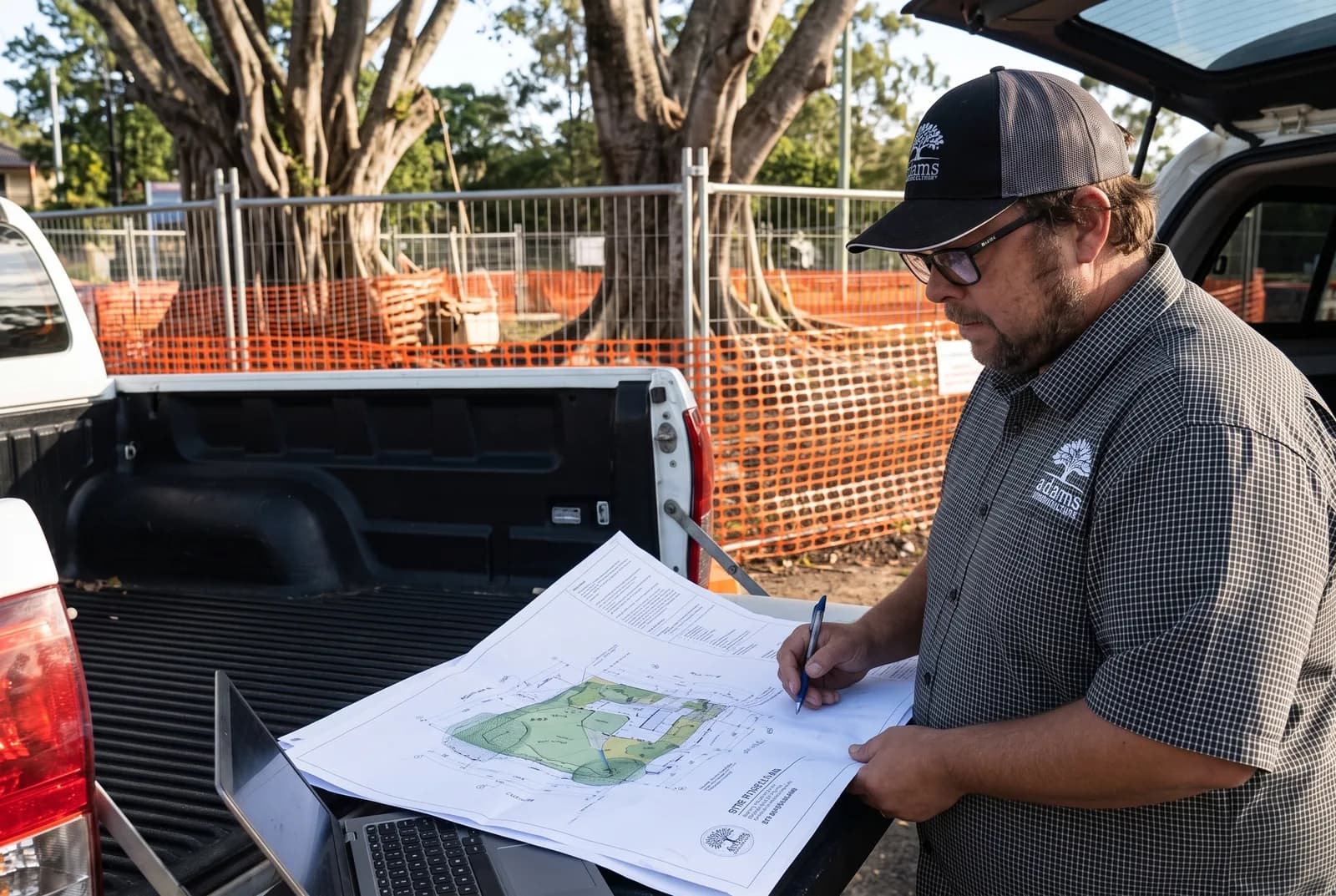
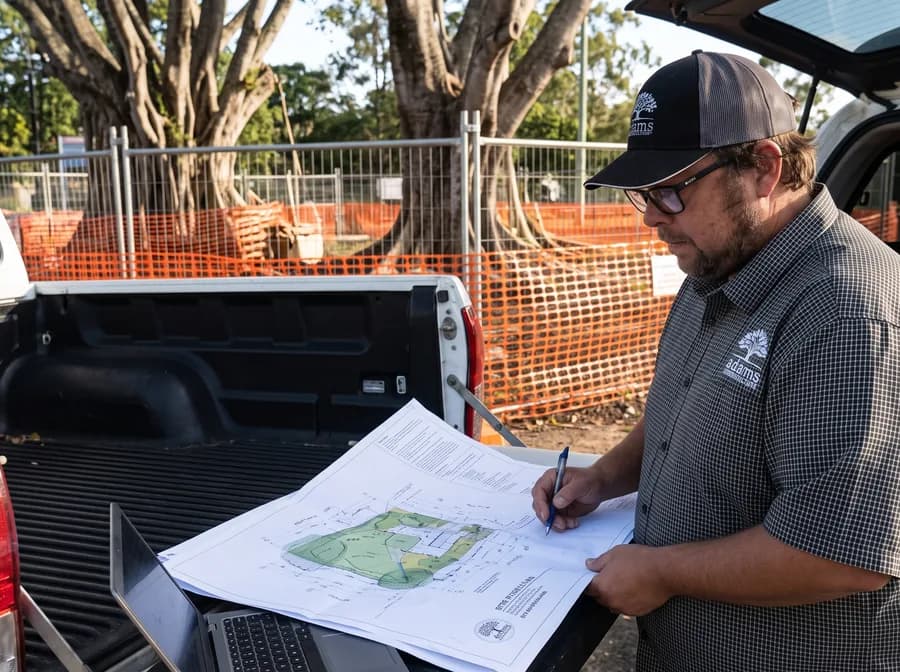
An Arboricultural Impact Assessment considers a specific proposal and works out what it does to the trees. Not the site in the abstract, and not a design that might still change — the thing that has been drawn.
That means the assessment is only as current as the plans it was written against. A significant design change after the AIA is prepared can invalidate its findings, which is why the sequencing matters: get the arborist in early enough that the design absorbs the constraints, then assess the design that results.
It is prepared against AS 4970:2025, the current edition for tree protection on development sites. AS 4970:2009 is superseded. Older approvals still reference it and it remains relevant for reading them, but it is not the current Standard and must not be presented as one.
What it contains
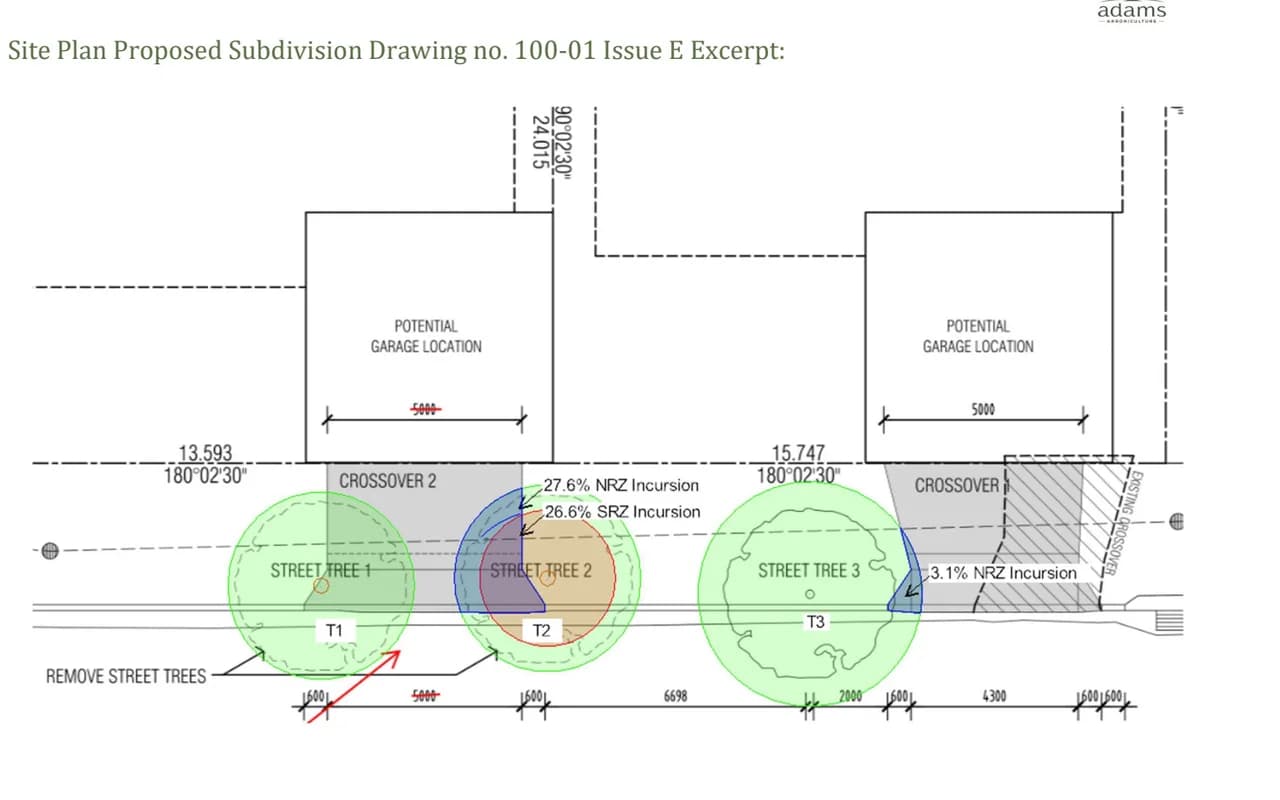
The trees on and adjoining the site, identified and measured on site. Their condition, structure and health. The zones each carries — the Notional Root Zone calculated from trunk diameter at 1.4 metres, and the Structural Root Zone from the diameter above the buttress flare.
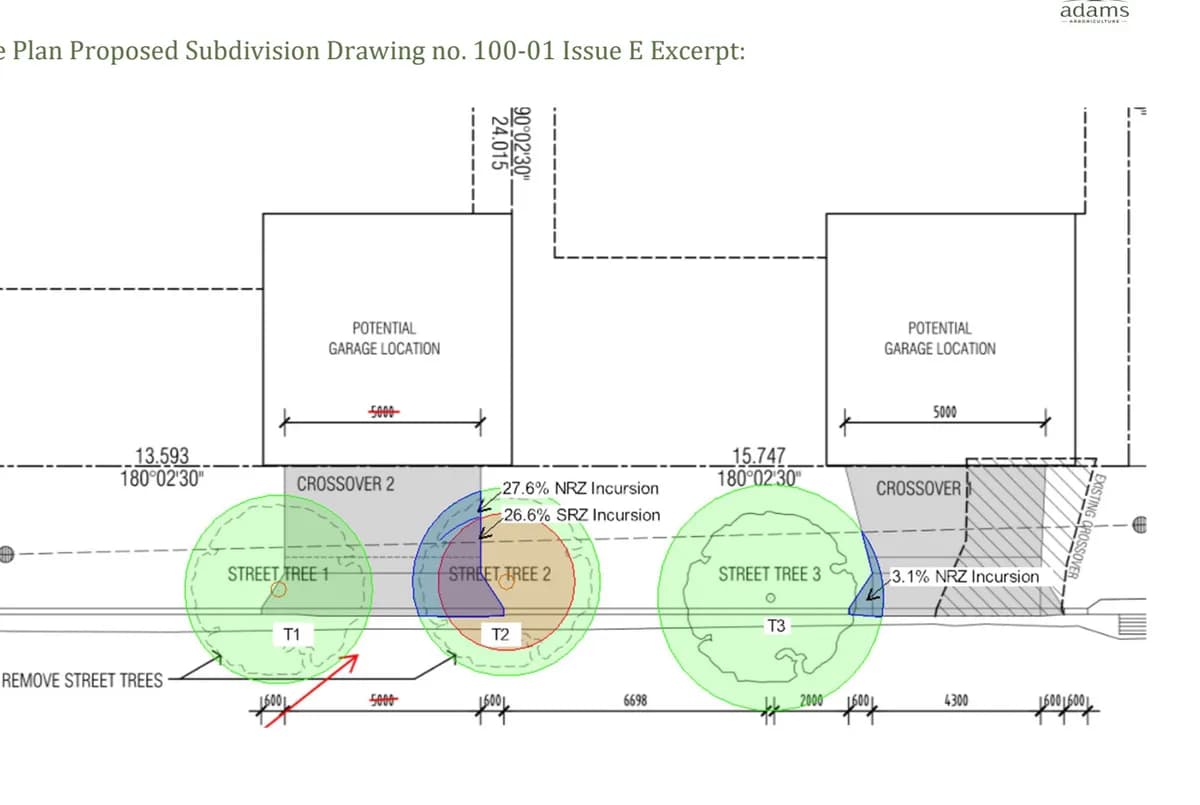
Then the proposal laid over that: where it encroaches, by how much, whether the encroachment intersects the Structural Root Zone, and how the resulting classification is to be responded to. Where trees are proposed for removal, the assessment addresses that; where they are proposed for retention, it addresses what retention requires.
- Tree scheduleEach tree identified and measured on site rather than estimated from a survey plan.
- Zone calculationsNotional Root Zone and Structural Root Zone, per AS 4970:2025.
- Encroachment assessmentWhere the proposal intrudes, by how much, and how that classifies.
- Impact and responseWhat the works do to each tree, and what is required if it is to be retained.
- Protection requirementsWhat has to happen on site, which often flows into a Tree Protection Plan.
It is not a Preliminary Arboricultural Report
A Preliminary Arboricultural Report sits earlier, at design and planning stage, while the layout can still change. An AIA addresses the impact of a proposal that exists.
AS 4970:2025 treats them as separate documents. They are not interchangeable, and where a condition, permit or certifier names one specifically, that is the one that has to be provided. This is the most common reason a project ends up commissioning a second report it did not budget for.
Councils, planners and certifiers use several names in circulation — Arboriculture Impact Report, AQF Level 5 arborist report, and others. Send the exact wording rather than a paraphrase.
What happens after it is lodged
Council may accept it, or come back with a request for further information. Adam handles those queries as part of the engagement rather than treating the report as delivered and finished.
Where the approval that follows carries conditions — protection measures, supervision, a completion inspection — those flow from what the assessment recommended, and the same arborist closing them out is usually simpler than introducing a new one halfway through.