When a DA needs arboricultural material
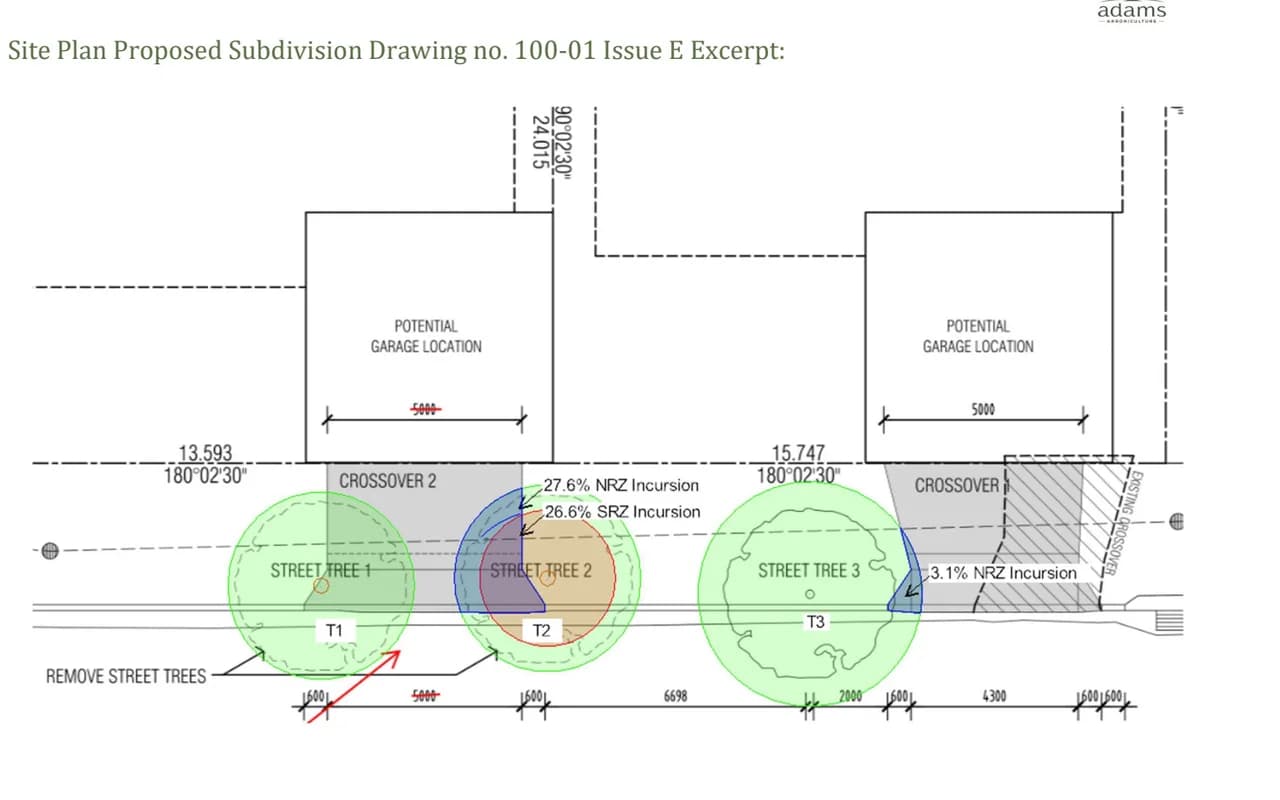
Whenever the proposal affects vegetation the council has an interest in. That covers protected vegetation on the site, street or council trees adjoining it, significant or heritage-classified trees, and trees on a neighbouring property whose root zones extend across the boundary.
It also arises where the planning scheme requires it for the type of development regardless of whether any particular tree is individually protected. Whether it applies to your site is a check against the address rather than a judgement about the trees.
The timeline, and where it usually goes wrong
The order the documents arrive in matters more than most applicants expect.
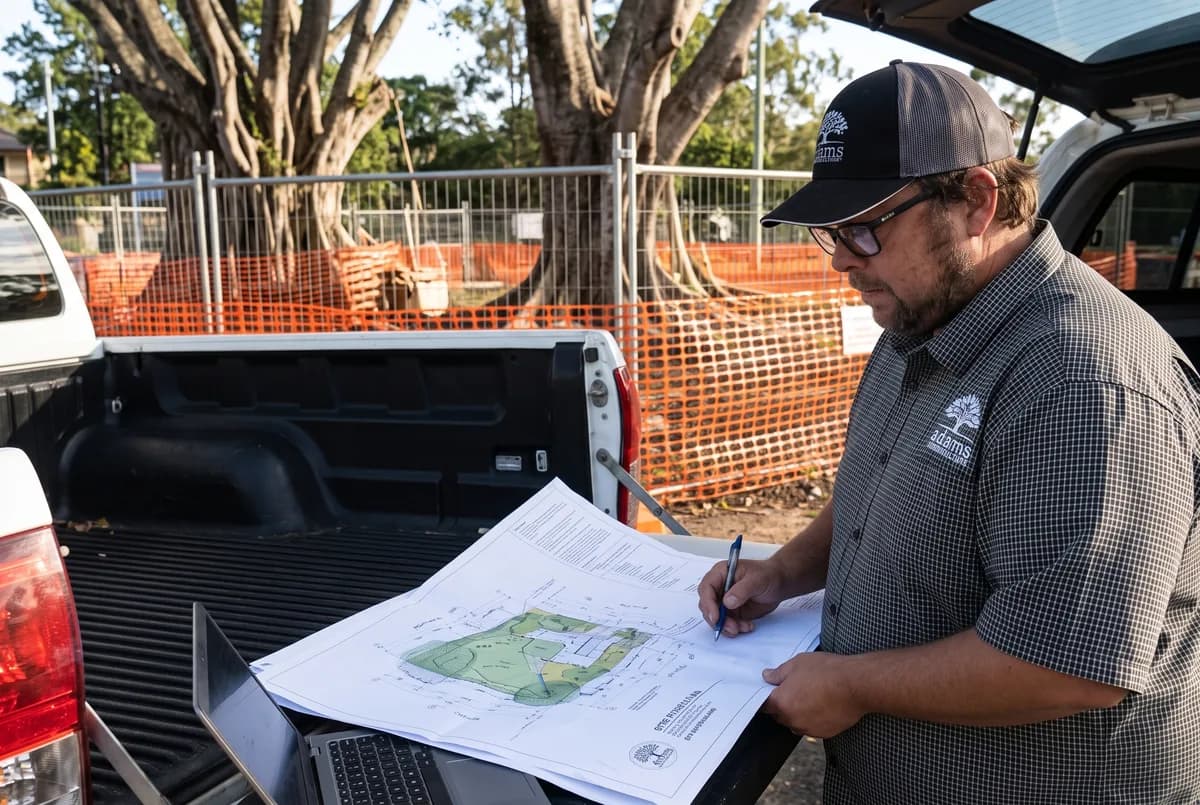
- Concept, before the layout is fixedVerbal advice or a Preliminary Arboricultural Report. Constraints reach the drawing while it can still absorb them.
- Design settled, before lodgementAn Arboricultural Impact Assessment against the proposal as drawn.
- Lodged, under assessmentCouncil may issue a request for further information. Responding is part of the engagement, not a new job.
- Approved, with conditionsProtection plans and specifications, and often a named project arborist.
- Construction and completionSupervision where required, then the completion inspection that closes the condition out.
What happens when it arrives late
The common failure is an application lodged without arboricultural material, or with material prepared against an earlier version of the design. Council issues a request for further information, the clock stops, and the applicant discovers a tree constraint at the point where the plans are hardest to change.
From there the options narrow. Redesign, which means resubmission. A changed approval pathway, which may mean a different assessment level. Or an application that proceeds on terms nobody would have chosen at concept stage.
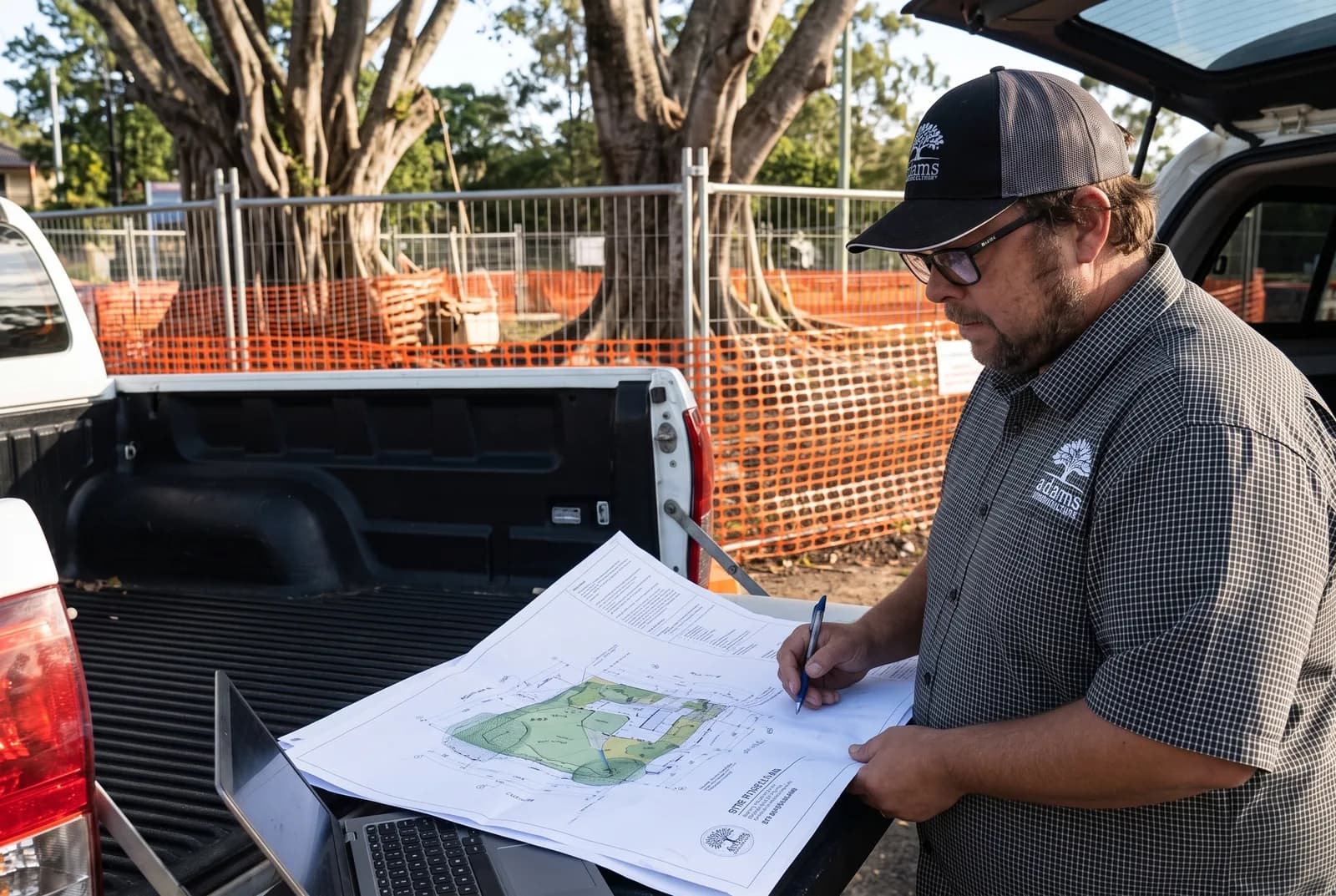
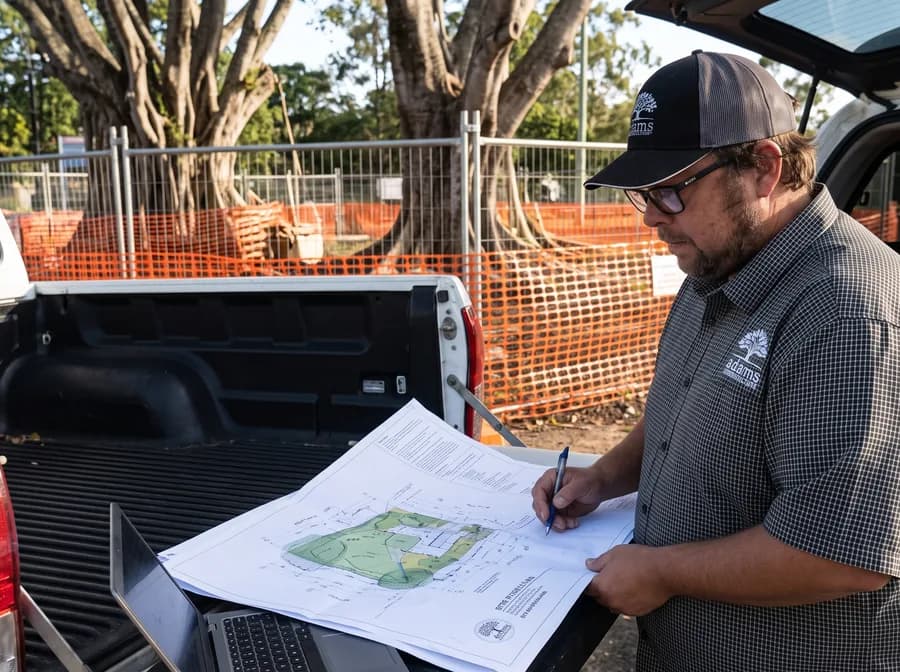
None of that is unrecoverable, and all of it is avoidable by an hour on site before the layout is fixed. That is the entire argument for early involvement, and it is the same argument whether the project is one dwelling or forty.
A significant change to the footprint, levels, services or access after an impact assessment can change its findings. Send revised plans through rather than assuming the report still holds.
Which document your DA needs
Most approvals name an Arboricultural Impact Assessment, because that is what addresses the impact of a proposal on the trees. Where the design is still moving, a Preliminary Arboricultural Report is the design-stage document under AS 4970:2025. They are separate documents and are not interchangeable.
Some councils and certifiers use other names in circulation — Arboriculture Impact Report, AQF Level 5 arborist report, and others. Send the exact wording through and it is resolved before anything is prepared.