Councils · across South East Queensland
Heritage and significant trees
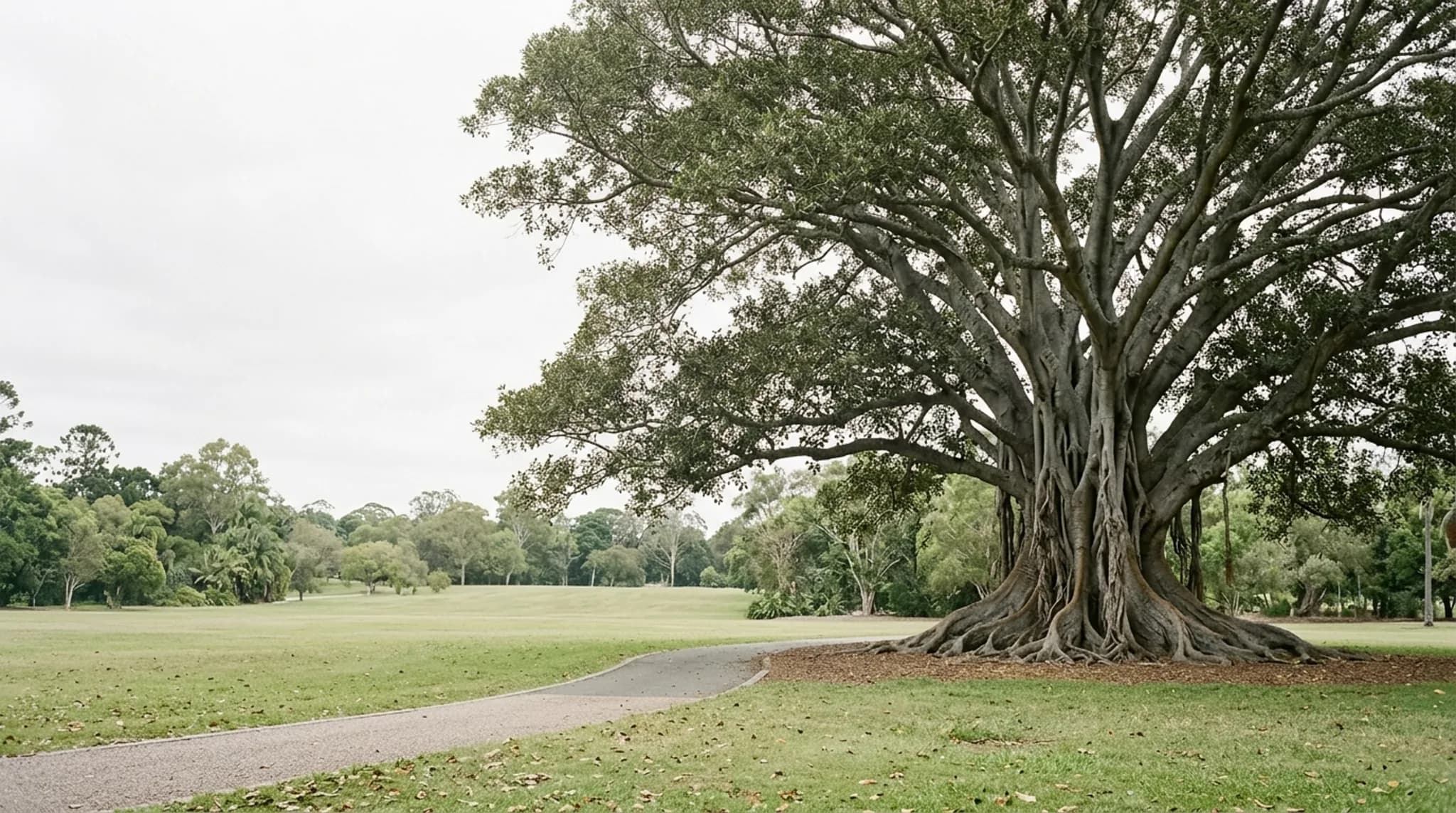
Some trees carry a classification of their own. Where one does, the council has a recorded interest in that specific tree — and the conversation changes accordingly.
0415 105 592Call 0415 105 592or send the details across
Send the property address
Send the address and, if you have it, any classification or listing reference.
What it means
A recorded interest in one particular tree
Most protection is general — an instrument applying to vegetation on a class of land. A classification is different: it attaches to an identified tree, and it exists because somebody assessed that tree and recorded it.
The classifications differ by council. Brisbane applies terms including Significant Landscape Tree, Significant Urban Vegetation, Significant Native Vegetation and Waterway and Wetland Vegetation. Moreton Bay records habitat trees and significant trees. Others carry their own.
What they share is consequence: where a tree is classified, works affecting it will go through the council, and the threshold for what is achievable is generally higher than for unclassified vegetation.
- Significant Landscape Tree (SLT)Brisbane City Council terminology for individual trees of landscape significance.
- Significant Urban Vegetation (SUV)Brisbane City Council terminology.
- Significant Native Vegetation (SNV)Brisbane City Council terminology.
- Waterway and Wetland Vegetation (WWV)Brisbane City Council terminology.
- Habitat trees and significant treesCity of Moreton Bay terminology.
- Heritage listingWhere vegetation forms part of a heritage place, a further layer applies alongside vegetation protection.
How it runs
When a classified tree is in the way
The answer is rarely "nothing can be done" and rarely "remove it". It is usually a narrower set of options than the client hoped for, established properly.
- 01
Confirm the classification
What the tree is recorded as, under which instrument, and by whom. That determines the pathway and the threshold, and it is a records check against the address.
- 02
Assess the tree on its merits
Condition, structure, health and risk — assessed independently rather than assumed from the classification. A classified tree in poor condition and a classified tree in good condition are different conversations.
- 03
Work out what is actually achievable
Frequently a design change, targeted works, or protection through construction rather than removal. Where the honest answer is that the proposal has to move, that is said early rather than after an application fails.
- 04
The application, if one is warranted
Prepared to the council's requirement, with the arboricultural basis set out so the decision is made on qualified information. No arborist can promise an outcome, and this one will not.
The other six
Different council, different rulebook
Each protects vegetation under its own instrument and names the approval differently. A report prepared for one does not automatically satisfy another.
- Brisbane City CouncilNatural Assets Local Law, NALL permit
- City of Moreton BayHabitat trees and significant trees
- Logan City CouncilOperational works for vegetation clearing
- Redland City CouncilLocal Law No. 6, Tree Protection Areas
- Ipswich City CouncilVegetation Protection Orders
- Sunshine Coast CouncilDevelopment permit to clear
- City of Gold CoastAssessable vegetation
Common questions
About classified trees
It is assessed rather than ruled out, and the threshold is generally higher than for unclassified vegetation. What matters is the arboricultural basis and what alternatives exist. The council makes the determination, not the arborist.
A records and mapping check against the address, which does not require anyone to attend the property. Worth doing before any planning proceeds on the assumption that the tree can go.
Both things can be true, and they are assessed separately. Establishing what the tree is actually contributing to the damage — which frequently involves engineering or geotechnical input alongside arboricultural — is what any application would need to rest on.
Not quite. Where vegetation forms part of a heritage place, a further layer applies alongside ordinary vegetation protection, and both need to be established. Send the address and any listing reference you have.
Contact
Send Adam the address and he will take it from there
For many protected vegetation questions, the property address is enough to start checking. Call, or send the details below.