What usually lands on you
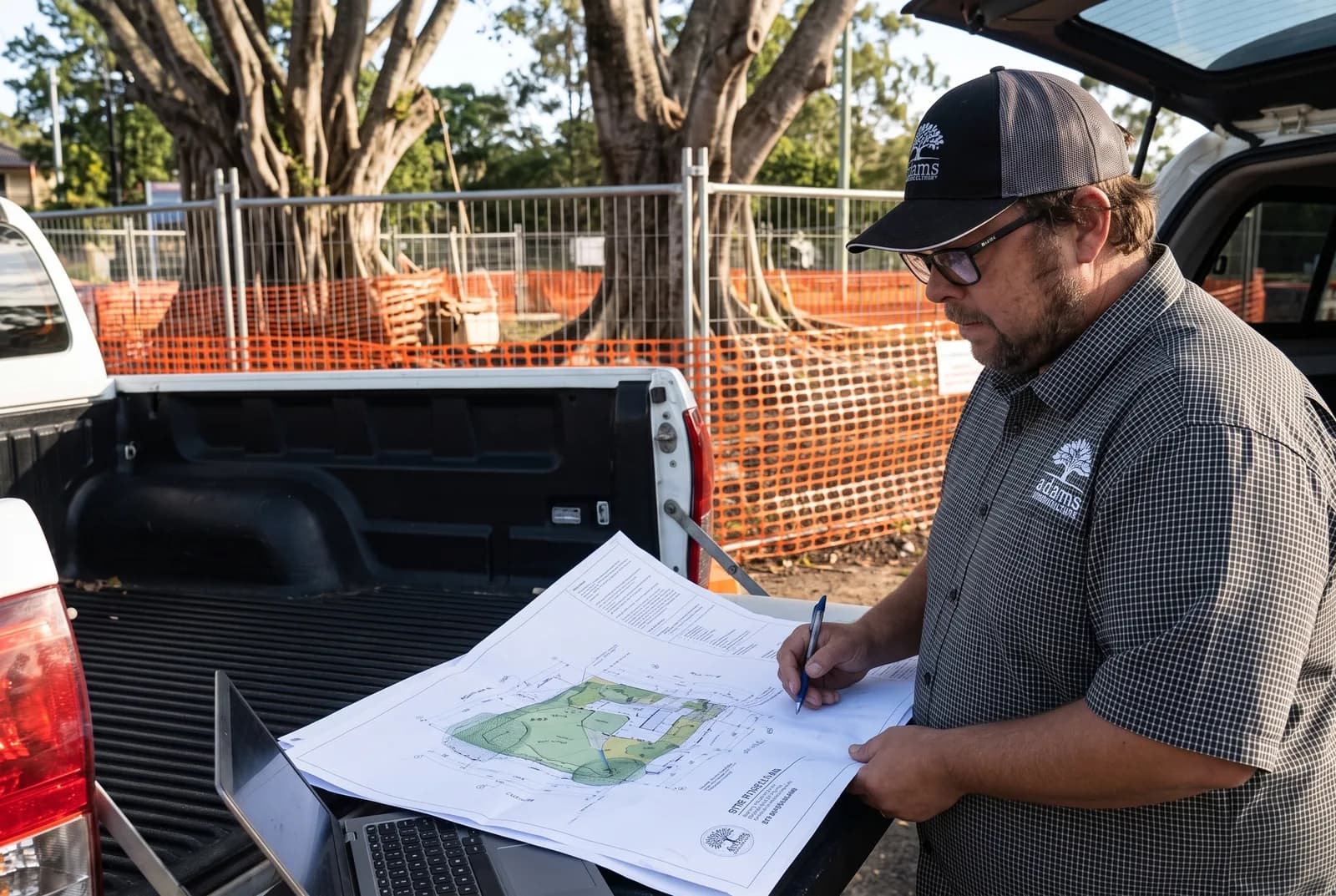
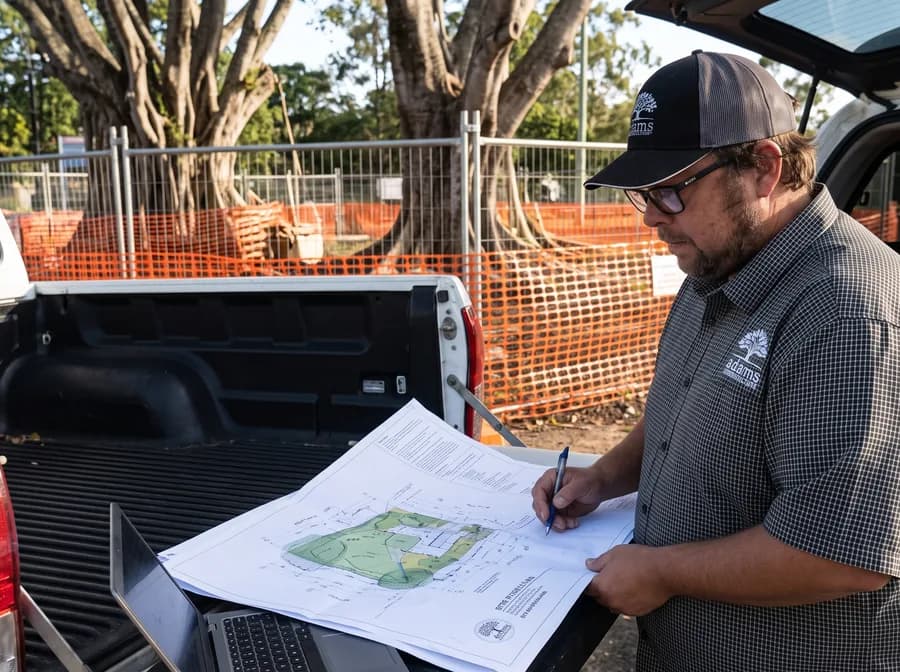
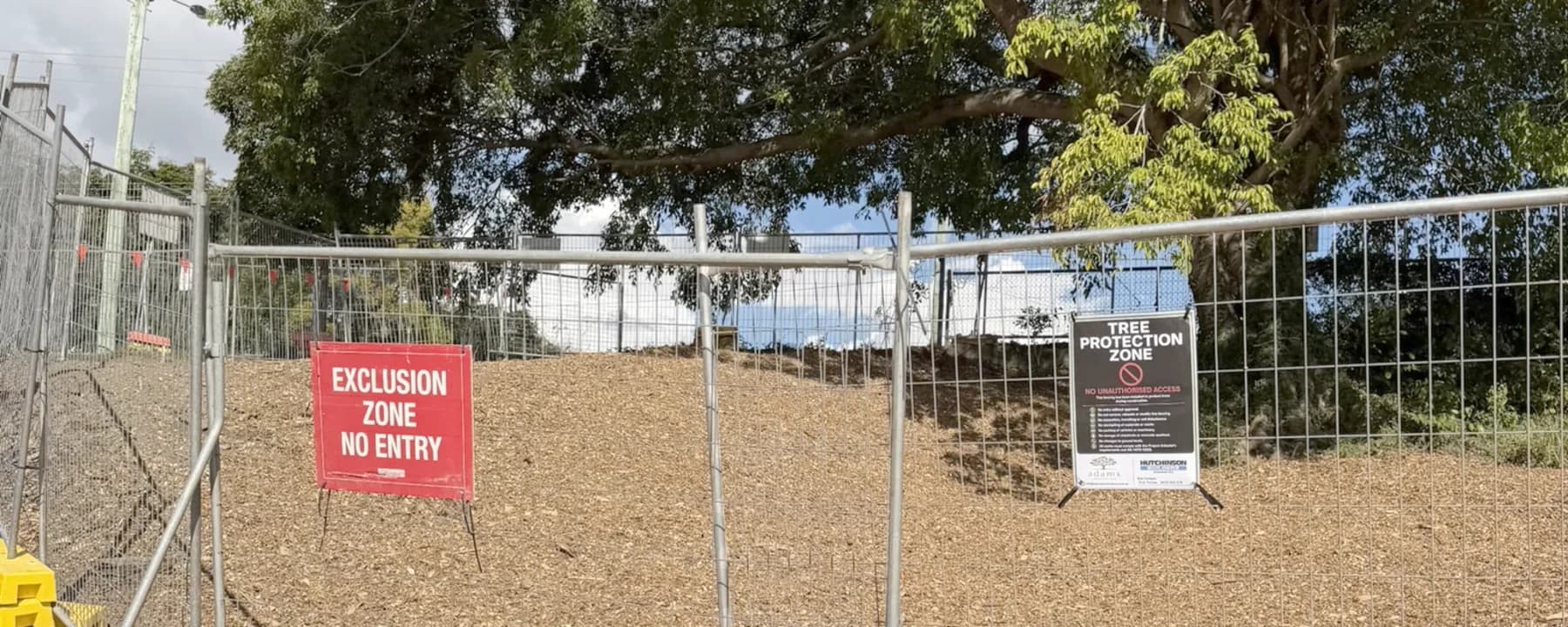
A drawing showing a protection zone, a condition requiring it be maintained, and often a requirement that an arborist attend for particular works. None of which you wrote, and all of which you are responsible for delivering.
The awkward part is that protection documents are frequently written to be technically correct rather than usable — a restatement of the Standard rather than a straight answer about what happens when a service has to cross the zone.
Adam ran crews before he consulted. The advice is written on the assumption that a site has twenty things to sequence and needs to know which of them actually matter.
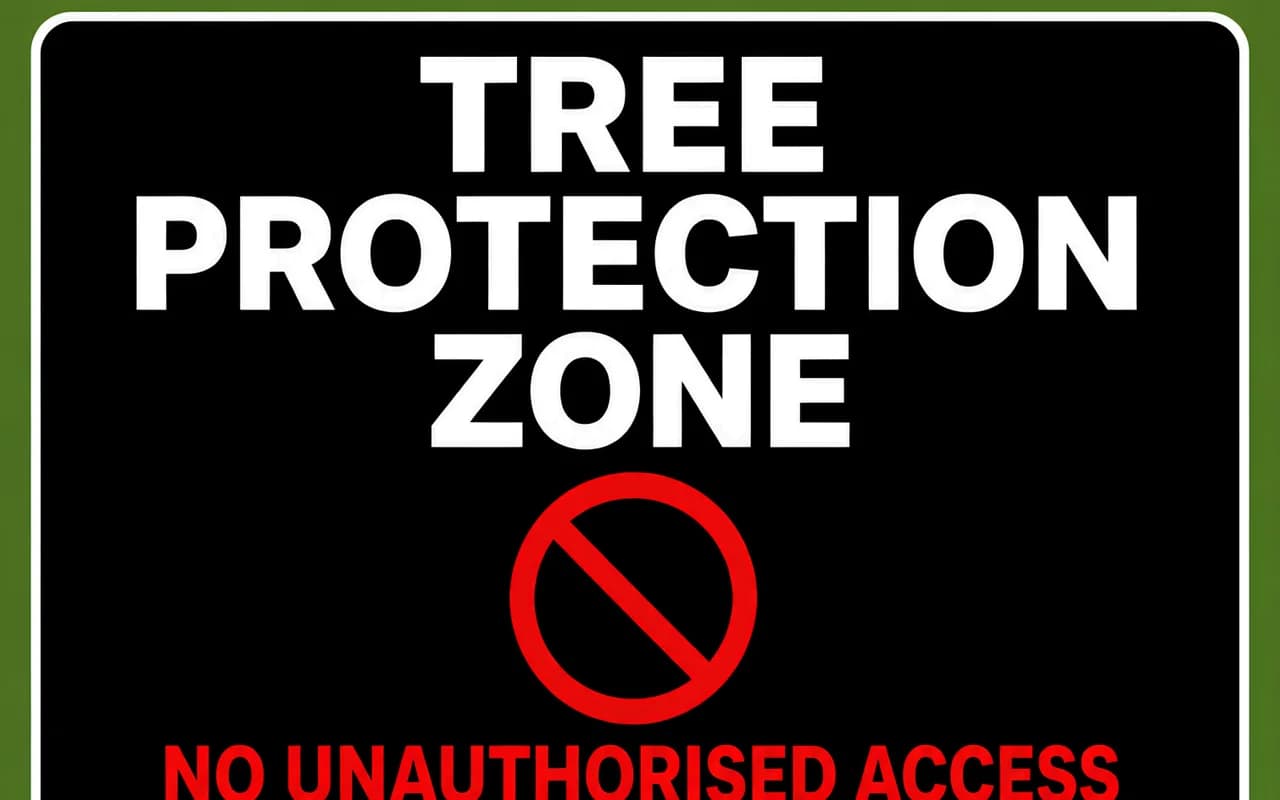
A specification a site cannot practically follow gets quietly ignored in week two. That helps nobody and protects no trees.
The questions that come up on site
These are the ones worth resolving before they become a problem rather than after.
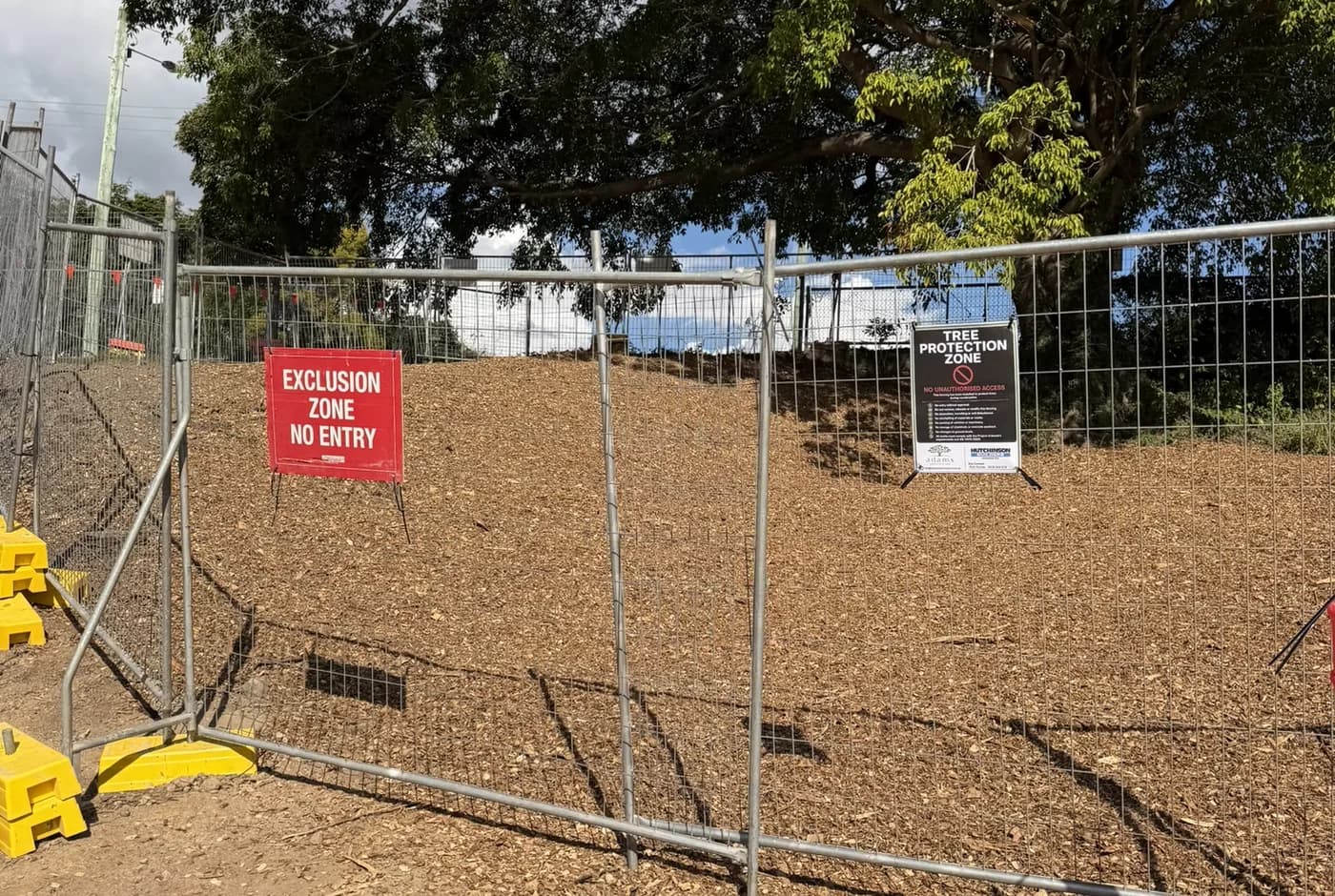
- Can the fence move for access?Sometimes, under conditions, with the arborist involved. What causes damage is moving it informally and never reinstating it.
- Can a service cross the zone?Often, depending on routing, depth and method. There are techniques a standard trench cannot match.
- We hit a root. Now what?Stop and call. Whether it can be cut, where, and what it means is a judgement made best while the machine is still standing.
- Can we store material there?Usually the single most damaging thing done to a root zone, and the easiest to avoid.
- Do we need someone here for this?The protection documents should nominate the hold points. If they do not, that is worth clarifying early.
Why this lands on the builder
Damage to a root system does not show up on the day. A tree that has lost significant root mass can look entirely normal through practical completion and decline a year or two later.
By then the site is finished, the record of what happened is thin, and the questions are awkward — particularly where the tree was a condition of the approval and the condition has not been discharged.
Having an arborist attend at the points that matter, and recording what was found and decided, is the cheap version of that conversation.
Closing the condition out
Where an approval requires the completed works to be inspected and certified, the named document has to be provided before the condition is discharged — a Completion Report, a Final Arborist Report, an Arborist Certification Report, or a Declaration of Compliance, depending on what the approval says.
They are not interchangeable, and providing the wrong one leaves the condition open. Send the wording through and it is resolved before anything is prepared.
If works are already underway
Not too late, just more constrained. What matters first is establishing what has already happened around the retained trees, because the response depends on it — and because the record is worth having either way.
A site visit is the honest starting point. Where damage has occurred, saying so and addressing it is a better position with a council than a clean certificate that does not survive scrutiny.