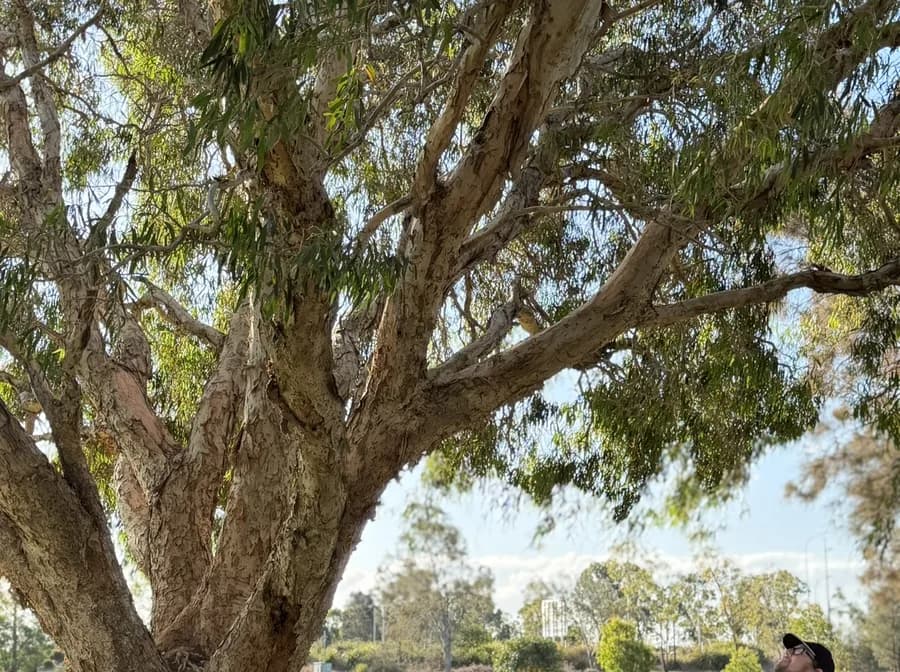
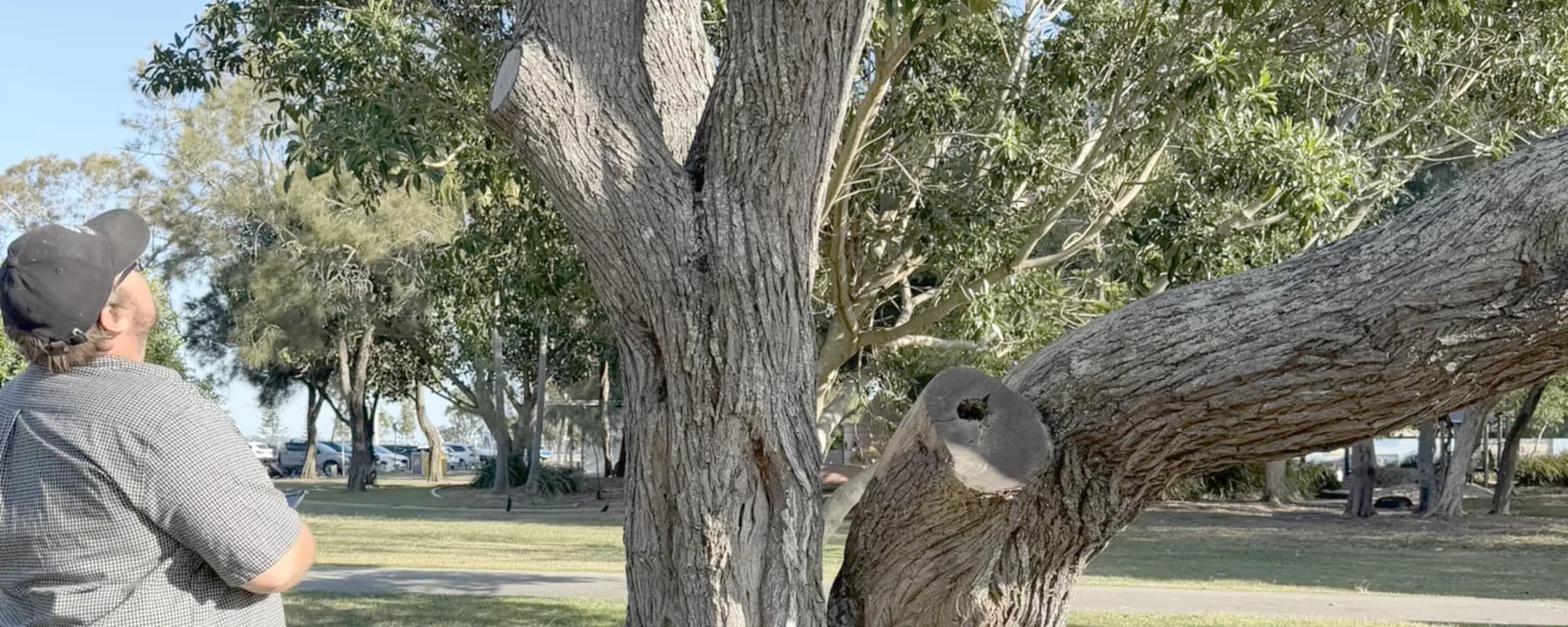
Why the decline arrives late
Trees have reserves. A mature tree that loses a share of its root system or has its soil compacted does not respond immediately — it draws on stored energy and continues looking normal, sometimes for a season, sometimes for several years.
By the time the canopy thins, the fencing is long gone, the landscaping is in, and nobody connects a tree declining now to an excavator that was there two summers ago. The tree is treated as a mystery, or worse, as a tree that has simply reached the end.
That delay is the single most important thing to understand about this problem, because it is why the damage goes unrecorded and why the response is usually late.
A tree that looked fine at practical completion is not evidence that the works did no harm. It is evidence that the reserves had not run out yet.
What actually causes it
Almost never a single dramatic event. Usually an accumulation of ordinary site activity in the root zone.
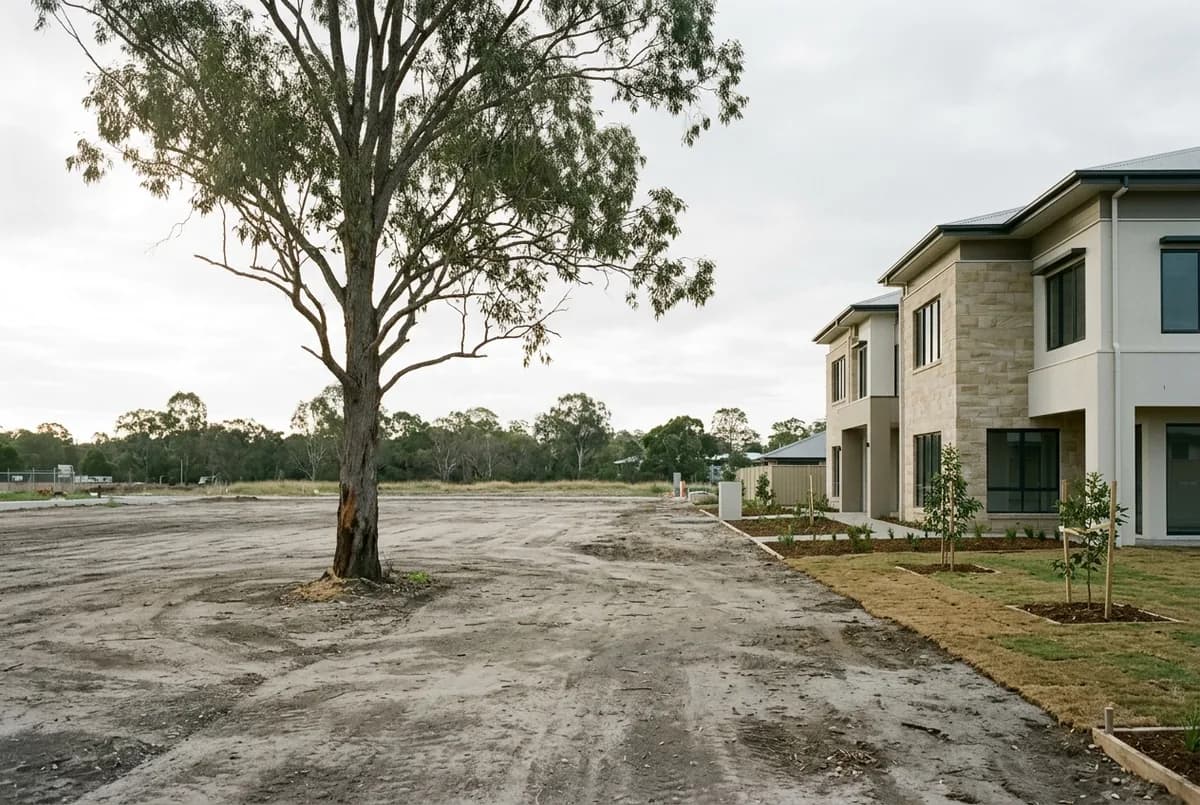
- CompactionRepeated traffic over the root zone collapses the soil structure roots need for oxygen and water. Often the largest single factor.
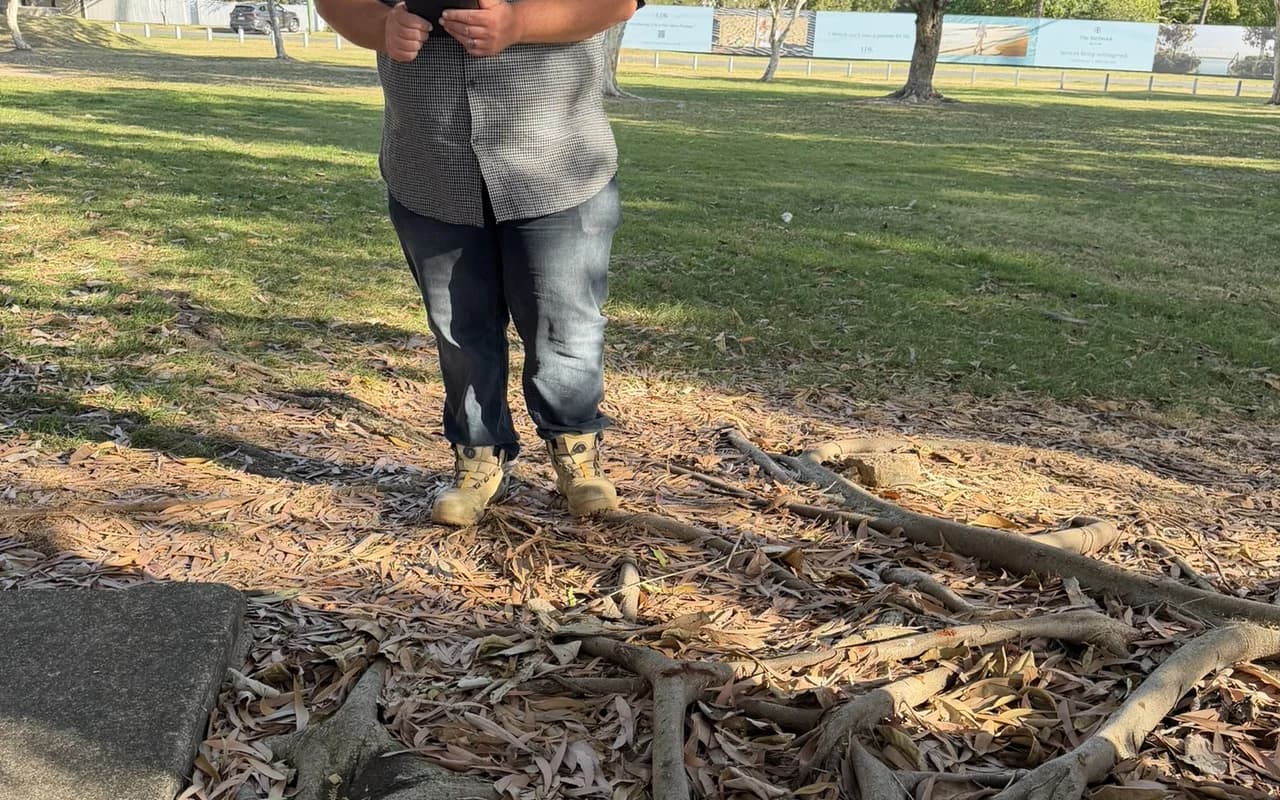
- Cut rootsServices, footings, drainage and level changes, particularly where roots were torn by a bucket rather than cut cleanly.
- Changed levelsFill over the root zone buries it; cut removes it. Both are damaging and neither looks like damage.
- Altered drainageNew hard surfaces redirect water. A tree that had adequate moisture may no longer.
- Stored materials and washoutSpoil, sand, and concrete or render washout over the root plate.
- Mechanical damage to the trunkImpact wounds at the base, frequently hidden later by landscaping.
What can be done
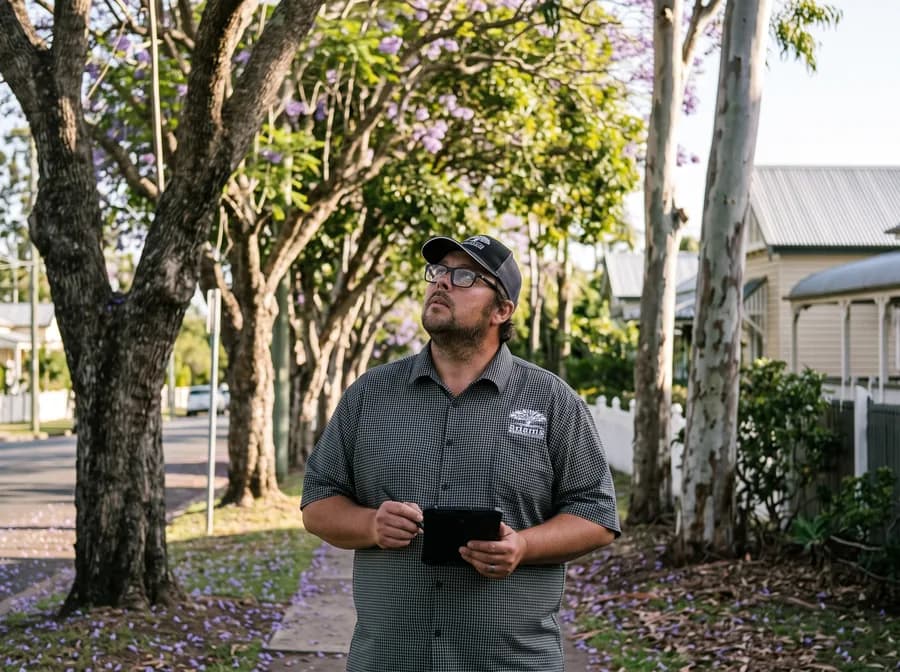
More than nothing, and less the longer it is left. The assessment starts by establishing what actually happened to the root zone — which sometimes means a root investigation to see what is there rather than inferring it.
Where soil structure is the issue, interventions are aimed at the ground rather than the tree: decompaction, mulching, correcting drainage, and removing whatever is still applying pressure. Where the tree has lost significant root mass, the work is about reducing demand while it rebuilds. Where a pathogen has taken advantage of a weakened tree, treatment may be appropriate to the diagnosis.
Recovery runs over seasons, so this is a program with attendance and monitoring rather than a single visit — and the response is adjusted against what the tree actually does.
The version where this does not happen
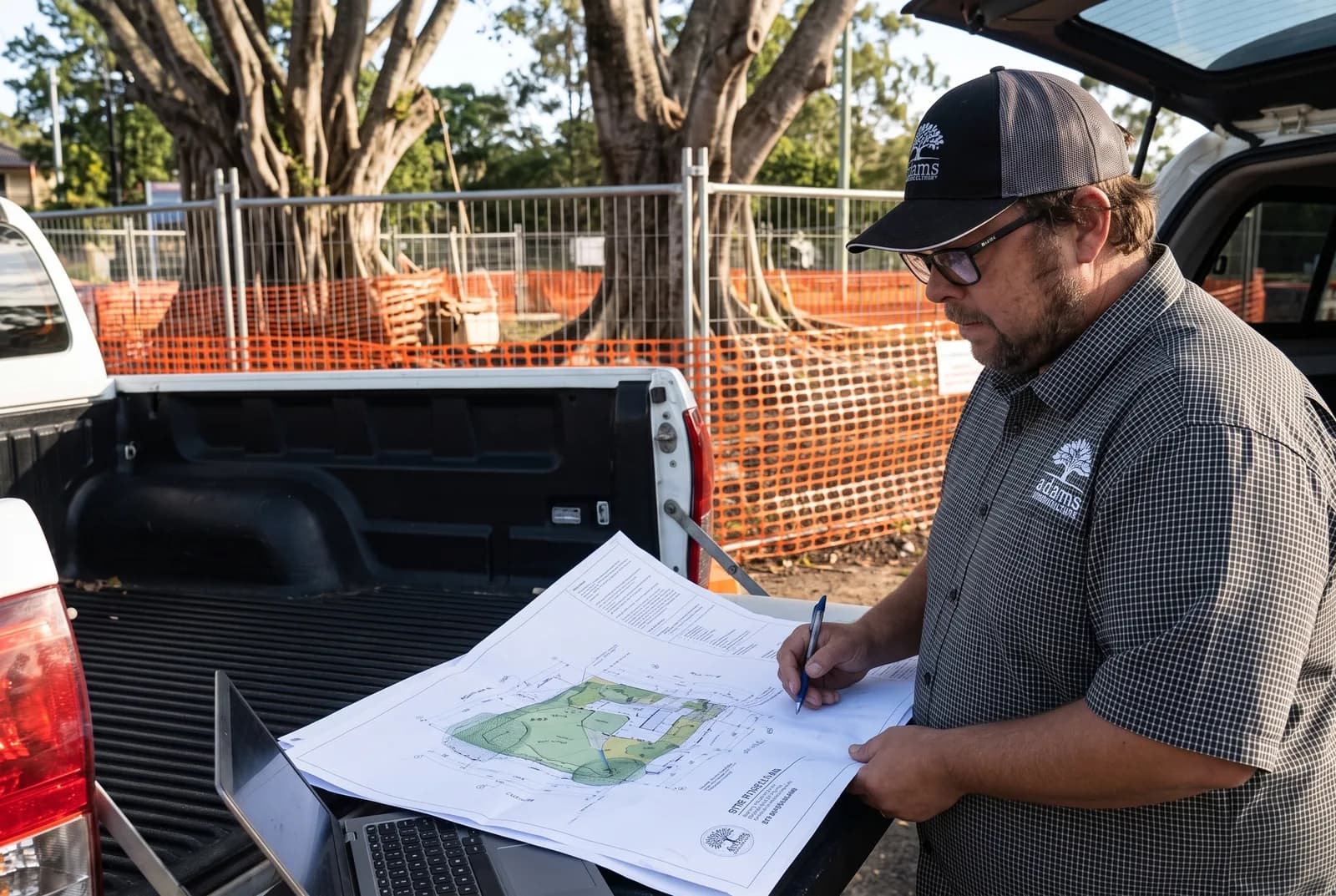
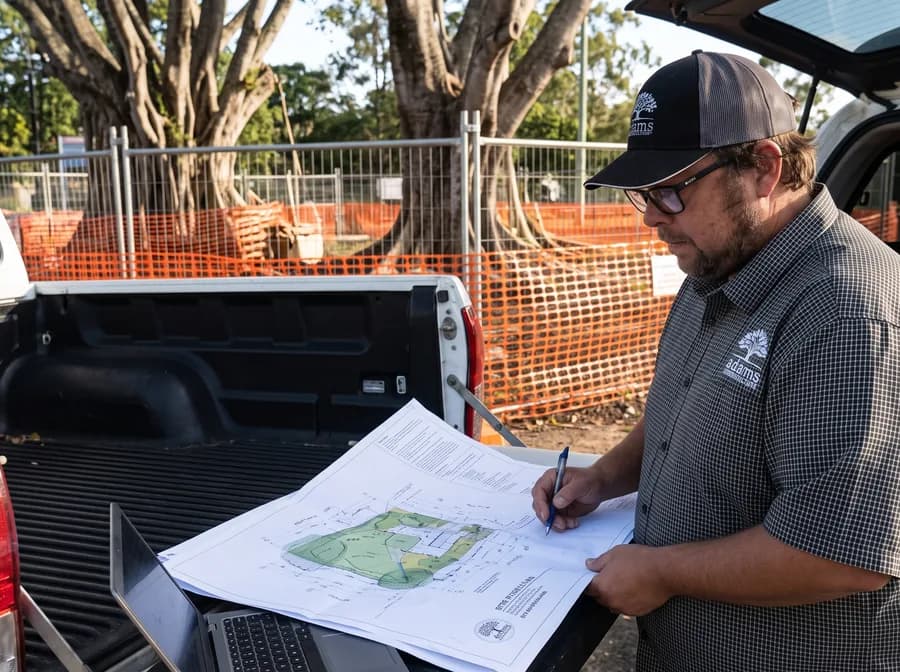
Protection that was set properly and stayed where it was put. A root zone that was not driven over, stored on, cut into or buried. Services routed with the tree in mind, and someone attending when works occurred inside the protection area.
That is what a project arborist is for, and it is dramatically cheaper than recovering a mature tree afterwards — or replacing one that was a condition of the approval.
If you are reading this before the works rather than after, the development pages are where that conversation starts.