When completion work is required
Usually because a condition says so. Approvals for works affecting protected vegetation commonly require an arborist to inspect the completed work and certify it, and the approval is not fully discharged until that happens.
It comes up in several situations, and they are not all development projects.
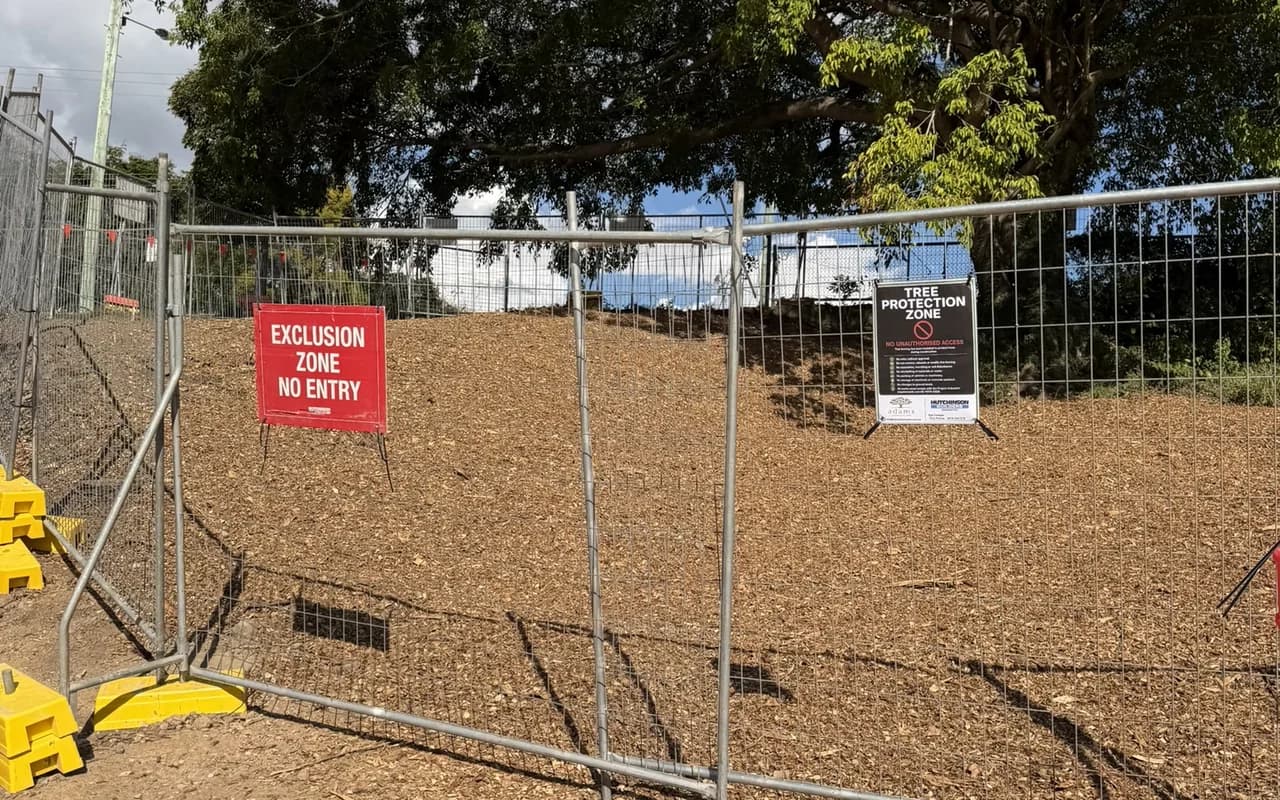
- Council has approved works to protected vegetationAnd attached a condition requiring the completed work to be inspected.
- Street or council trees have been affectedWhere works occurred on or near vegetation the council owns.
- Protected vegetation on private landWhere approved work has been carried out under a permit.
- A project requires final arboricultural certificationAs part of closing out the development approval.
An unmet completion condition does not usually announce itself. It surfaces later — at sale, at a subsequent application, or when someone reads the approval carefully.
Four names, and they are not interchangeable
Different approvals name the final document differently, and the name is not decoration. Providing a Completion Report where a Declaration of Compliance was required means the condition has not been satisfied, however thorough the report is.
- Completion ReportThe general form, where an approval requires the completed works to be reported on.
- Final Arborist ReportUsed by some approvals for the same closing document.
- Arborist Certification ReportWhere certification specifically is what the condition asks for.
- Declaration of ComplianceFor approved works to protected vegetation — Brisbane City Council terminology.
What the inspection covers
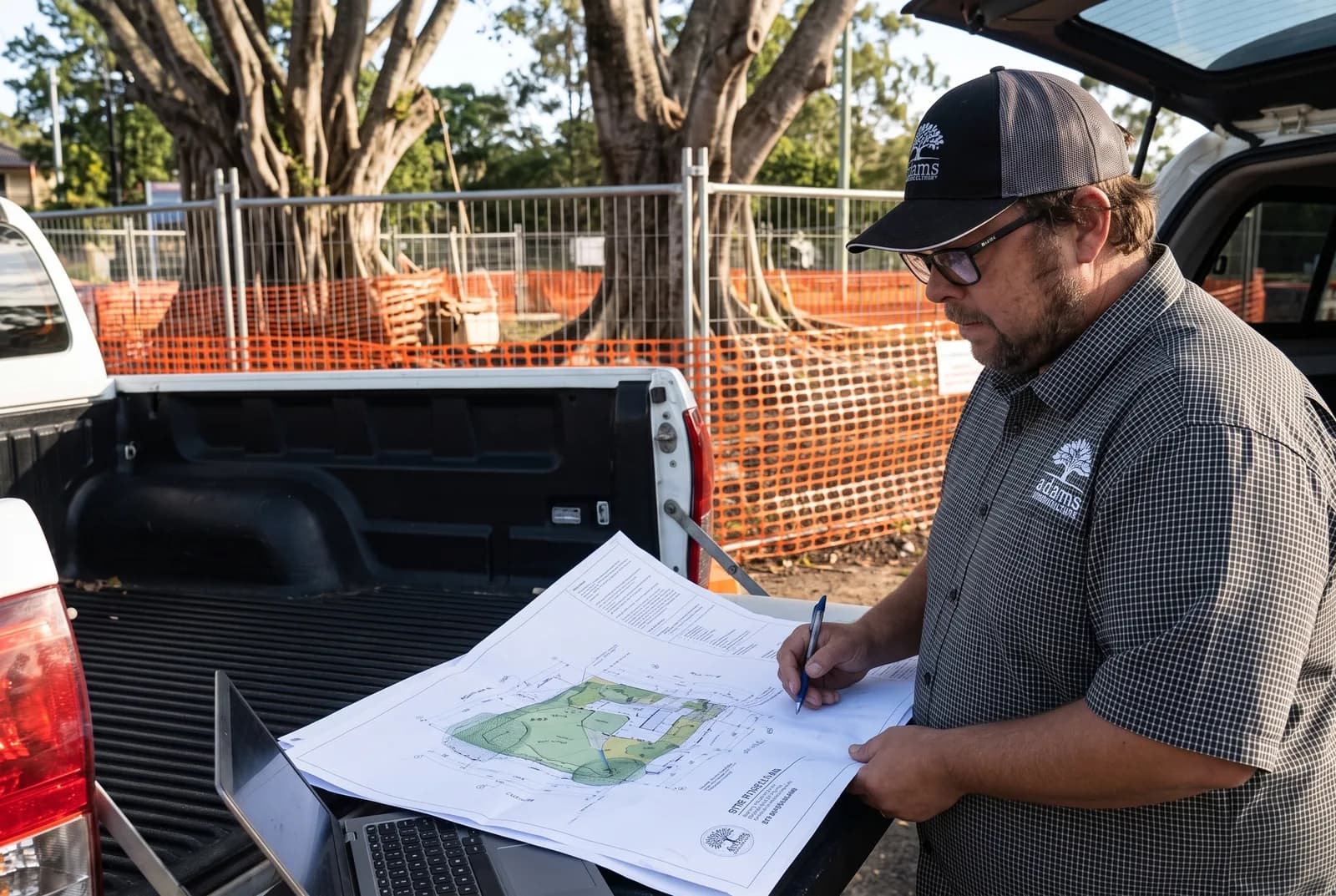
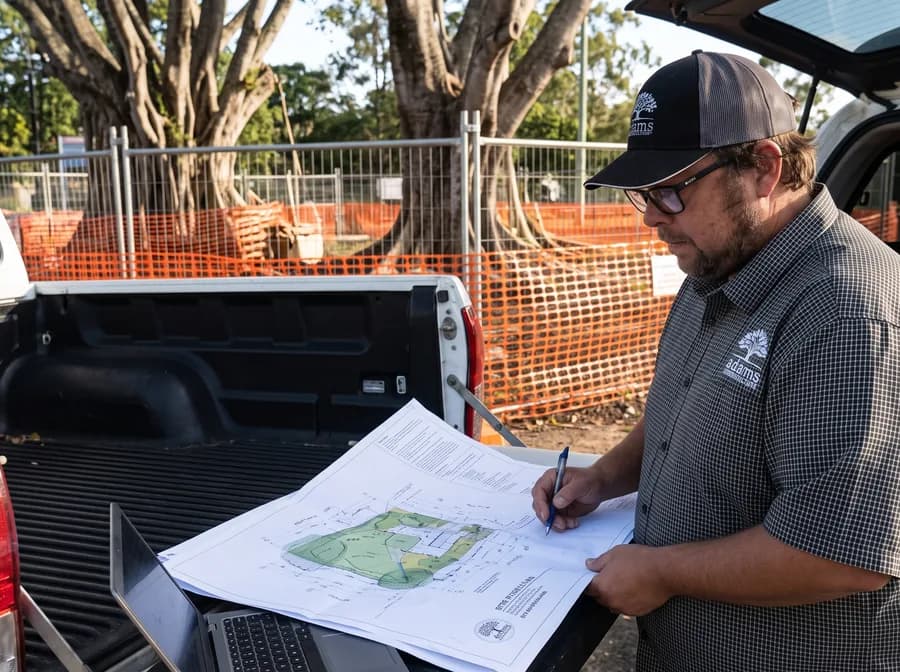
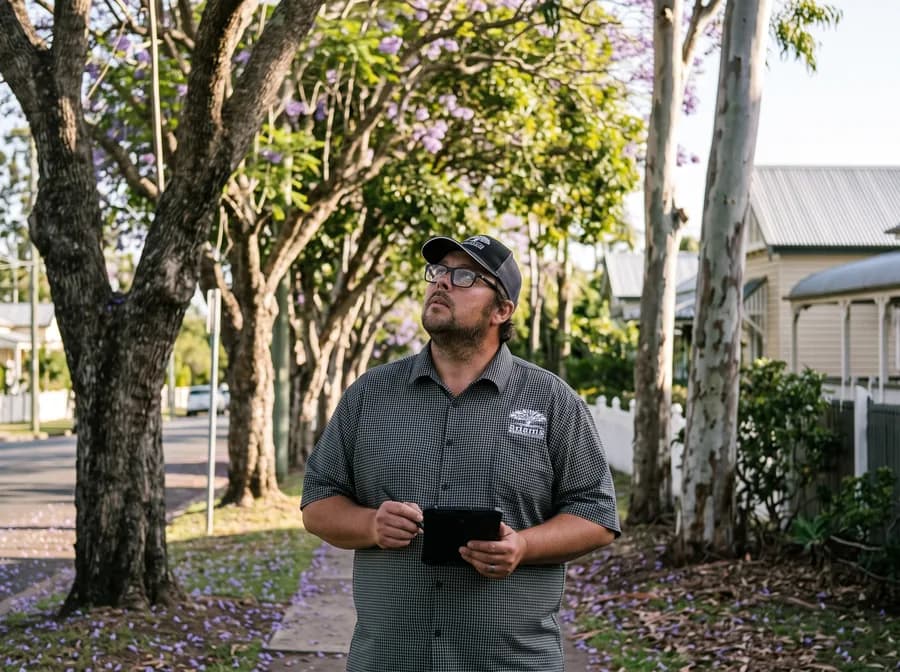
The completed works, against what was approved. Whether the protection measures were in place and maintained, what condition the retained trees are in, whether the works carried out match what the permit allowed, and whether anything occurred that the approval did not contemplate.
Where the same arborist has been across the project, this is largely confirming a record that already exists. Where the arborist is arriving cold at the end, it is reconstructing what happened from what is visible — which is harder, occasionally inconclusive, and worth avoiding by engaging earlier.
If something did not go to plan
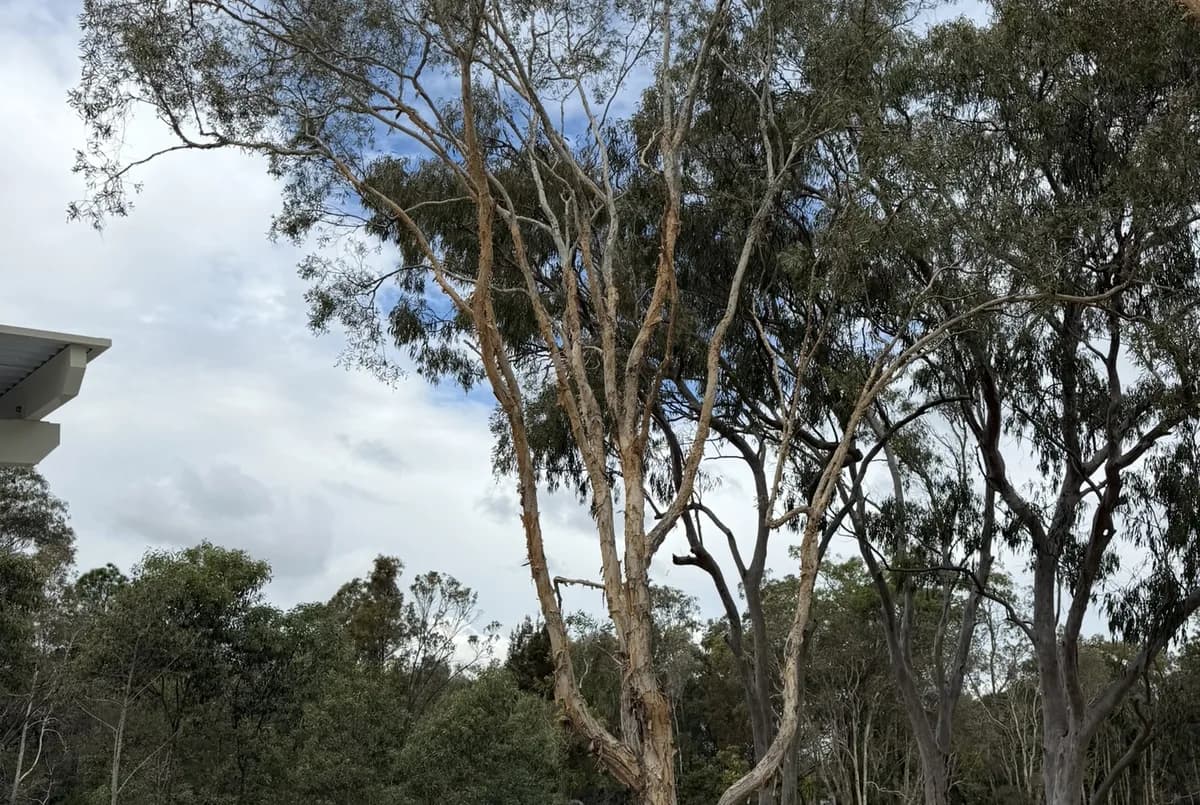
Sites deviate. Protection gets moved, a service goes somewhere unplanned, a root is cut that should not have been. A completion inspection that finds one of those is not automatically a disaster, but it is a fact, and the report records what was found.
Adams Arboriculture will not certify works it cannot verify, and will not describe an outcome that did not occur. Where there is a departure from what was approved, the honest path is to document it and address it — which is generally a better position with a council than a clean certificate that does not survive scrutiny.