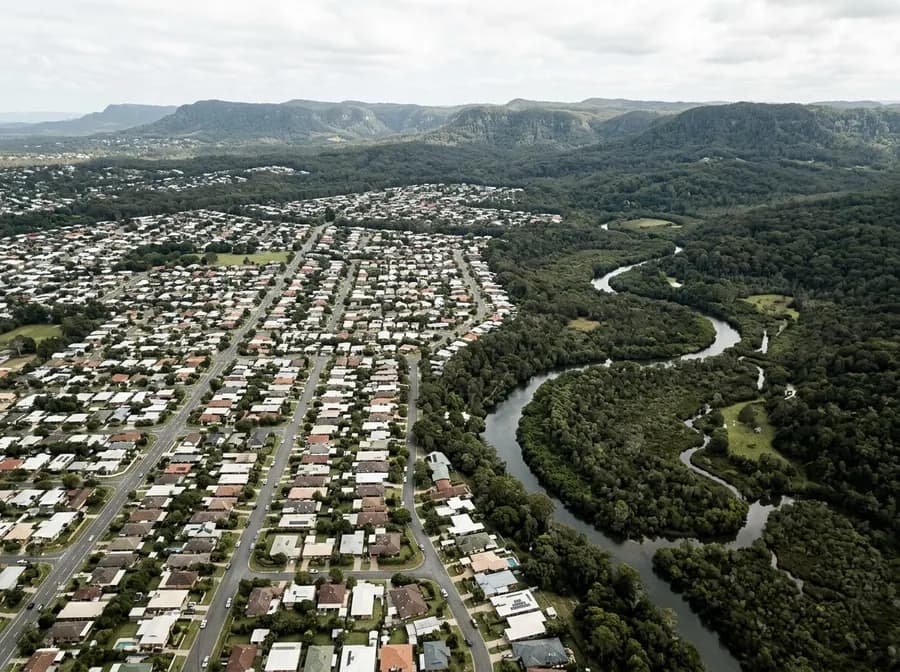
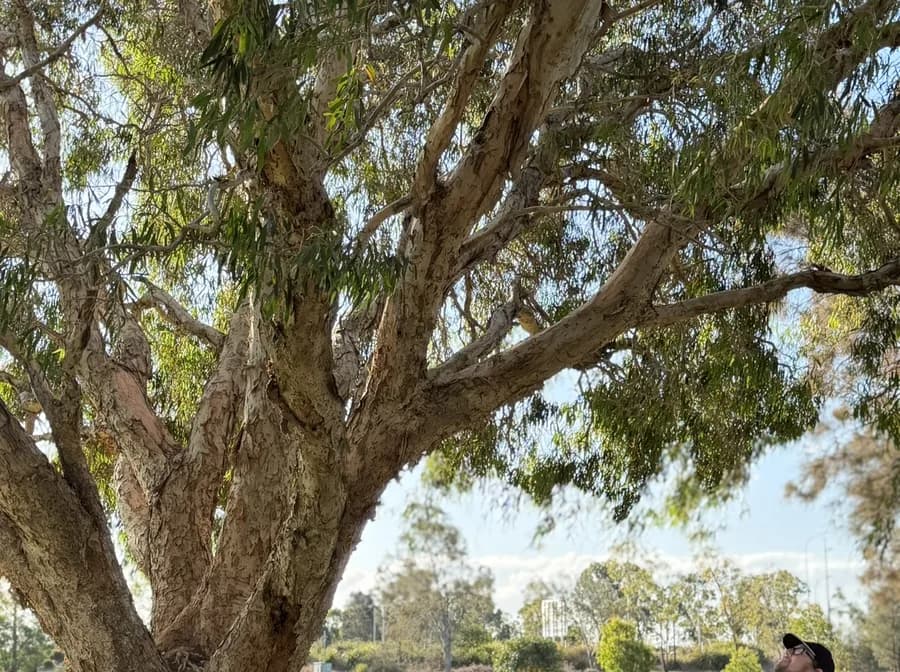


Two zones doing different jobs
The Notional Root Zone is about the tree surviving. It approximates the area of soil the tree depends on, and it is deliberately generous because roots spread further than most people expect — well beyond the canopy, in the top layers of soil where every site activity happens.
The Structural Root Zone is about the tree standing up. It is the much smaller area immediately around the trunk containing the roots that anchor it. Damage inside the NRZ tends to show up as decline over seasons. Damage inside the SRZ can show up as a tree on the ground.
Because they answer different questions, they are measured from different points on the trunk and calculated with different formulas. Neither of them is the Tree Protection Zone.
How the Notional Root Zone is calculated
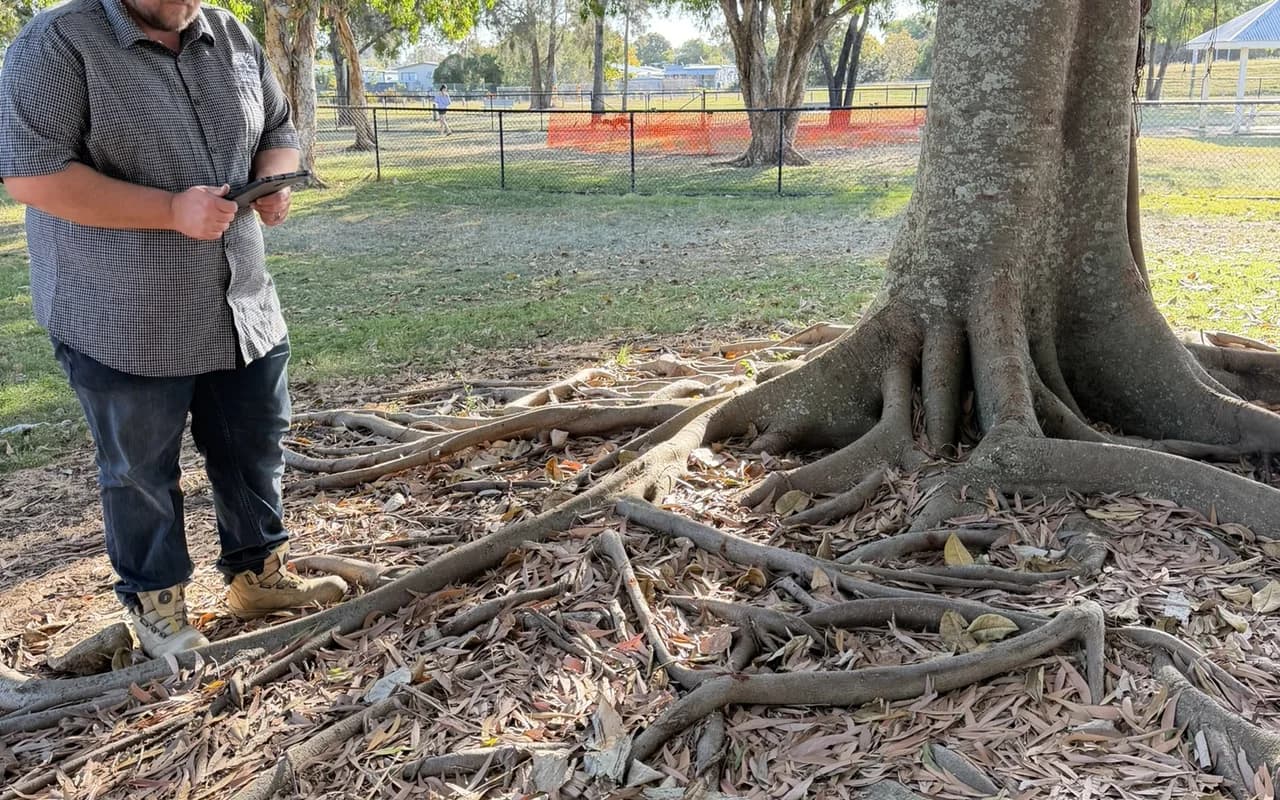
From the trunk diameter measured at 1.4 metres above ground — diameter at standard height, DSH. The radius is that diameter in metres multiplied by twelve, with a floor of 2 metres and a ceiling of 15 metres. The area is the circle that radius describes.
A 400 mm trunk gives a 4.8 metre radius. A 900 mm trunk gives 10.8 metres. A very large tree hits the 15 metre cap and stops there, which is a practical concession rather than a biological claim.
- Measured at1.4 metres above ground level.
- RadiusTrunk diameter in metres × 12.
- BoundsNever less than 2 metres, never more than 15.
- Used forThe starting point for the Tree Protection Zone, and the area encroachment is measured against.
How the Structural Root Zone is calculated
From a different measurement: the trunk diameter immediately above the root buttress flare, where the trunk stops widening into the roots. On a mature tree with pronounced buttressing that is a substantially larger number than the diameter at 1.4 metres, and using the wrong one produces a zone that is wrong in the wrong direction.
The radius is that diameter multiplied by fifty, raised to the power of 0.42, then multiplied by 0.64, with a minimum of 1.5 metres. The shape of the formula is the point: stability does not scale linearly with trunk size, so a tree twice as thick does not need twice the anchorage radius.
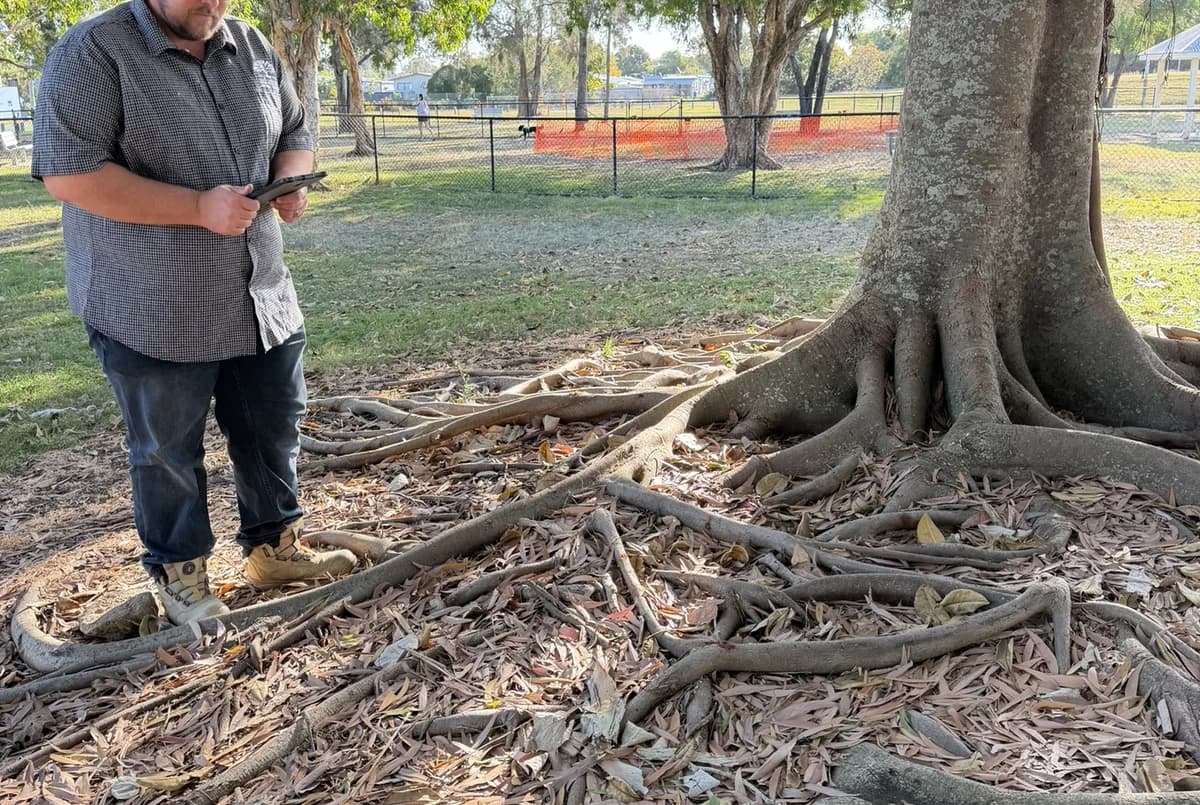
The SRZ is a notional area related to tree stability. It is not the same thing as the NRZ, and it is not the Tree Protection Zone.
Why the distinction changes the answer
Encroachment into the Notional Root Zone is graded. Ten per cent or less, clear of the Structural Root Zone, classifies as minor. Between ten and twenty per cent, still clear of it, is moderate. Above twenty per cent is major.
But any encroachment that intersects the Structural Root Zone is major regardless of the percentage. A trench that clips two per cent of the NRZ area is a manageable impact if it runs through the outer zone and a serious one if it runs beside the trunk — same area, different answer, because the roots in question are doing a different job.
That is why a plan showing a small percentage is not on its own reassuring. Where the encroachment sits matters as much as how much of it there is.
Where these calculations do not apply
Palms and multi-stemmed trees do not take the standard single-stem calculation. The supplied Standard does not support applying it to them, and Adams Arboriculture will not substitute an invented method — no averaging of stem diameters, no summing them, and no Structural Root Zone produced by forcing a single-stem formula onto a form it was not written for.
Those cases need a professional assessment. So do trees where the ground around them has already been cut into, because a zone that has been encroached before does not carry the same tolerance as one that has not.